
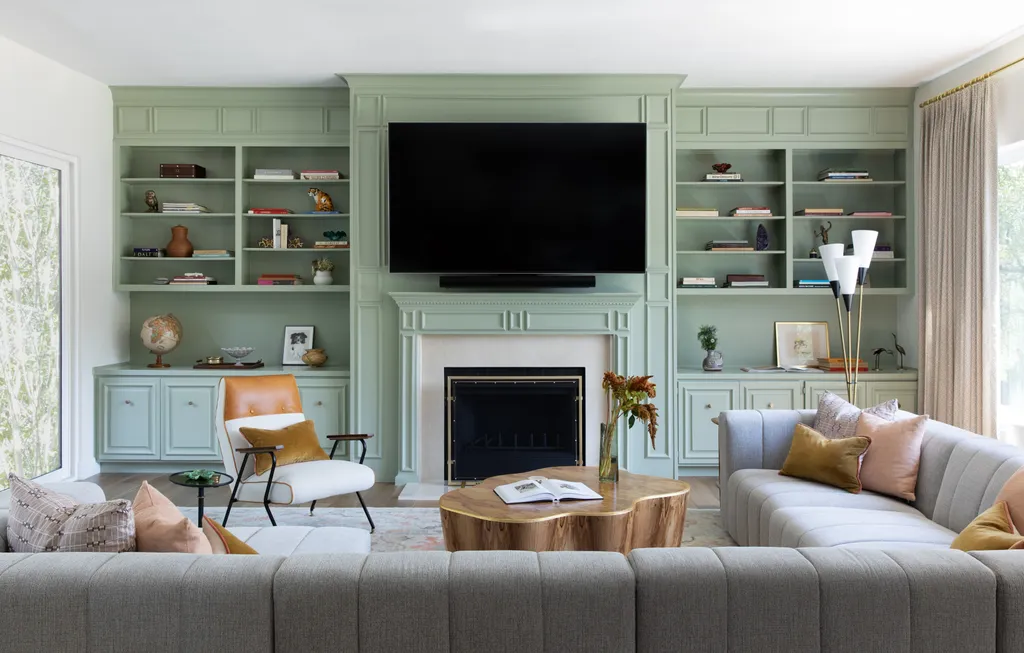

A combined game room and TV room can give everyone in the family a place to relax, play, watch movies, and spend time together without needing a separate room for every activity. The trick is to create clear zones while keeping the entire space connected.
The best family game room and TV room layouts balance comfortable seating with open play space, accessible storage, durable materials, and decor that works for both adults and kids. Here is a practical way to plan the room so it feels organized without becoming overly formal.
The Basic Layout for a Family Game Room + TV Room
Before buying furniture, divide the room according to how your family actually uses it. The TV area should feel comfortable for longer periods of sitting, while the game area needs enough open space for movement and easy access to equipment.
| Zone | Main Furniture | What to Prioritize |
|---|---|---|
| TV Lounge | Sofa, sectional, or lounge chairs | Comfortable viewing and easy conversation |
| Console Gaming | TV stand or media console | Controller and game storage |
| Active Play | Open floor or flexible seating | Clear movement area |
| Board Games | Coffee table or small game table | Easy access and comfortable surface height |
| Storage | Shelves, cabinets, or baskets | Fast cleanup and clutter control |
1. Start by Dividing the Room into Two Main Zones
The easiest approach is to create a dedicated TV lounge on one side of the room and an open gaming or play zone on the other. You do not necessarily need a physical wall between them. The sofa, TV console, rug, lighting, or furniture arrangement can visually define the lounge while the remaining floor area becomes the flexible game zone.
Keep the active area relatively open rather than filling every corner with furniture. This is especially important when younger children use the room for games that involve running, jumping, building, or floor play.
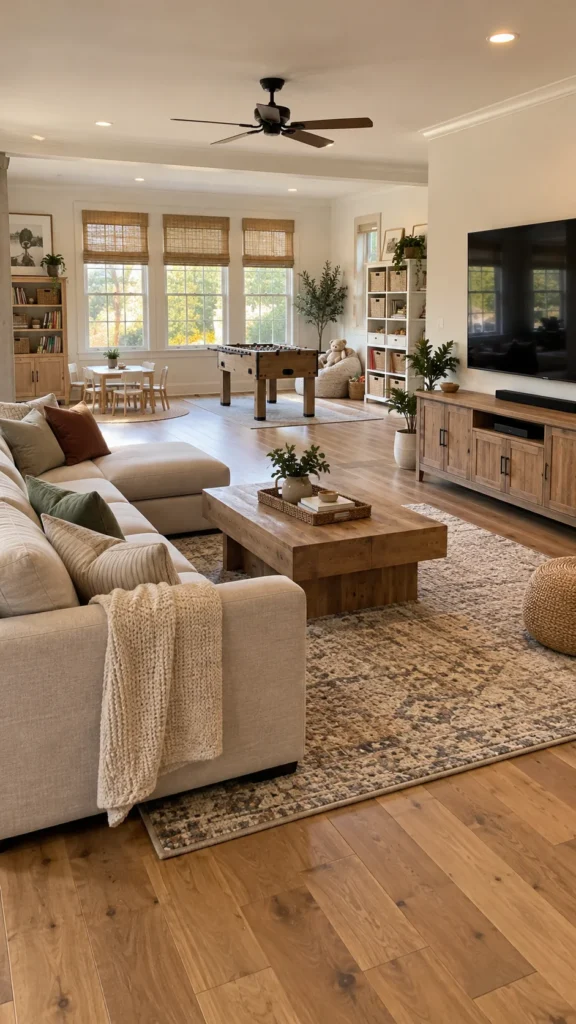
2. Make the TV Area the Comfortable Family Anchor
Position the sofa so it naturally faces the television while still allowing people to see and talk to one another. A deep sectional can work well in a large basement, while a standard sofa with one or two movable chairs may be better for a smaller room.
If several family members regularly watch together, choose seating based on actual household use rather than making the TV the only priority. An ottoman can provide extra seating, act as a footrest, and double as a surface for a tray.
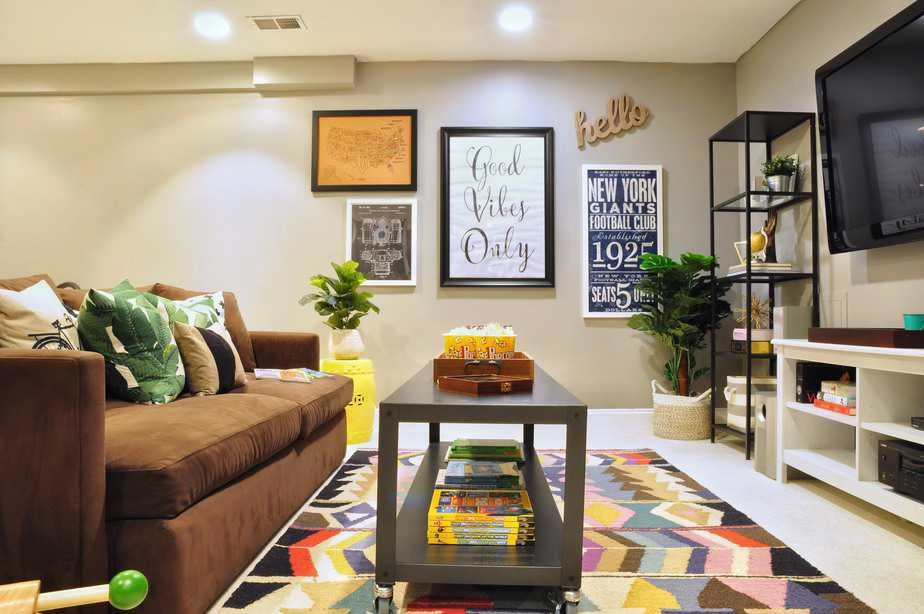
Amazon Find: Storage Ottoman
A storage ottoman can provide flexible seating while hiding blankets, controllers, toys, or board games when the room needs a quick cleanup.
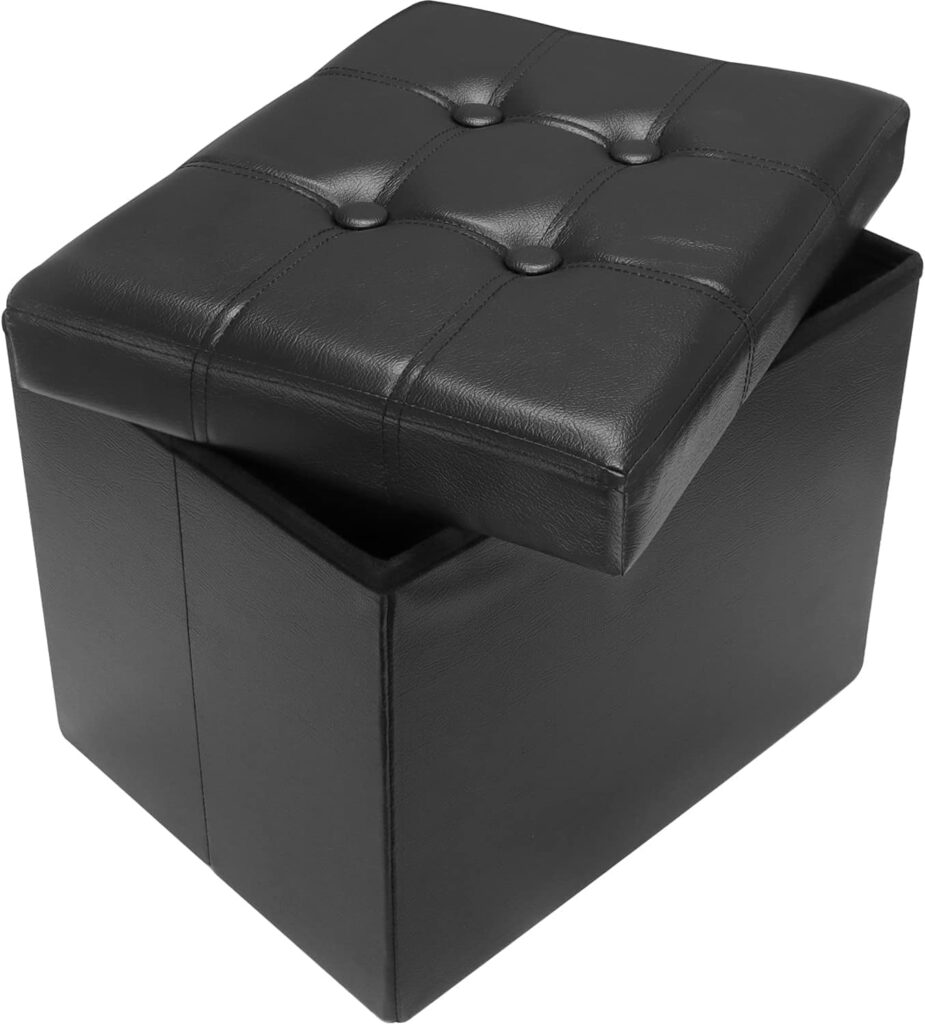
3. Use a Large TV for Both Movies and Gaming
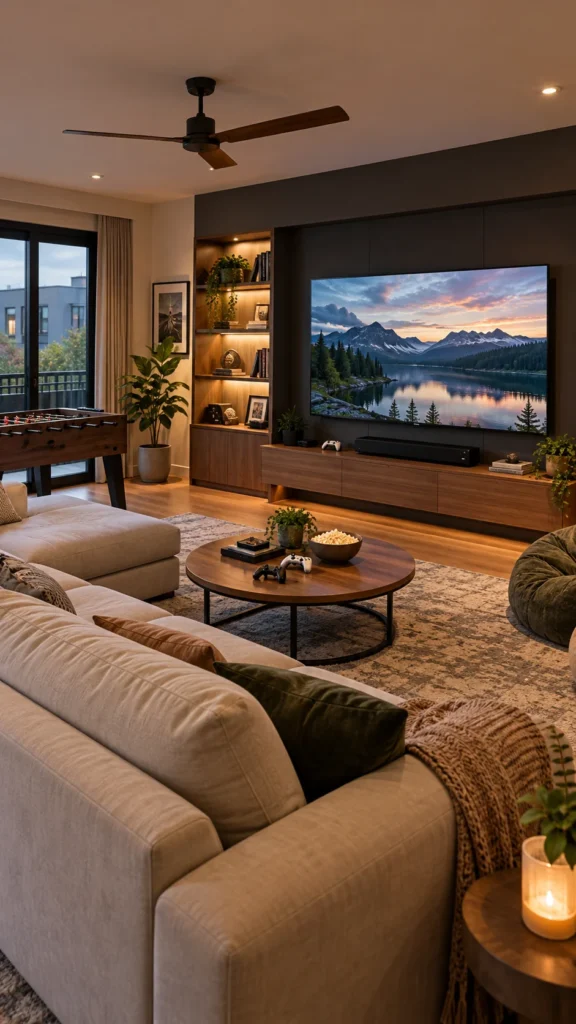
One screen can serve several purposes, which is particularly useful in a multipurpose family room. A wall-mounted TV or appropriately sized television can handle movie nights, console gaming, sports, and casual viewing without requiring separate entertainment zones.
Think carefully about where the screen is positioned. Avoid placing it where bright windows create distracting reflections, and leave enough room around the TV for ventilation and cable access. If children use the room, secure furniture and wall-mounted equipment appropriately.
4. Give Gaming Consoles Their Own Storage
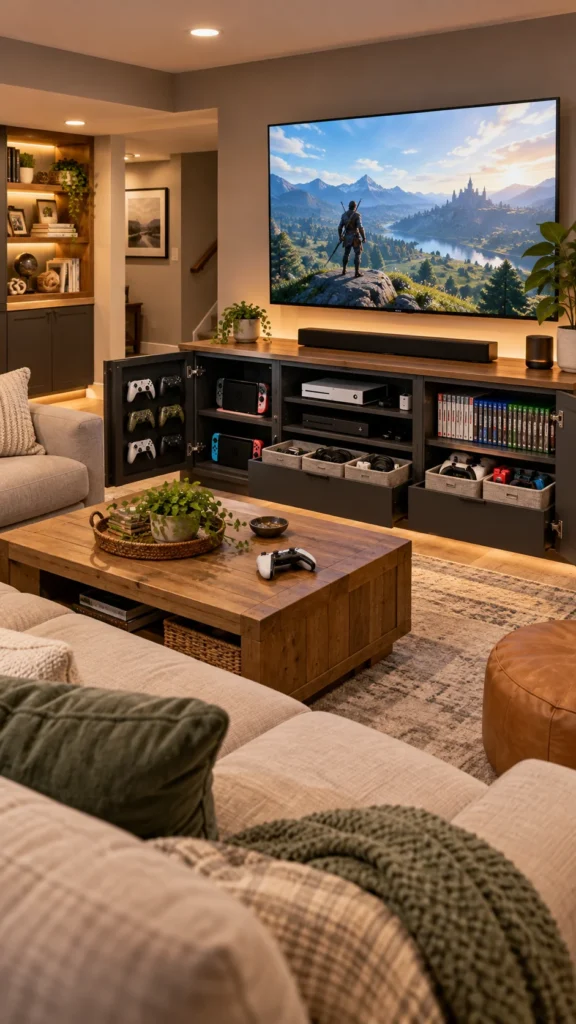
A family game room quickly becomes cluttered when controllers, games, charging cables, remotes, and accessories have no designated home. Use the TV console or a nearby cabinet to create an organized gaming station.
Keep frequently used controllers at an easy-to-reach height and place less-used accessories in labeled bins or drawers. If several people use different controllers or handheld systems, assigning each type of equipment a specific storage spot makes cleanup much easier.
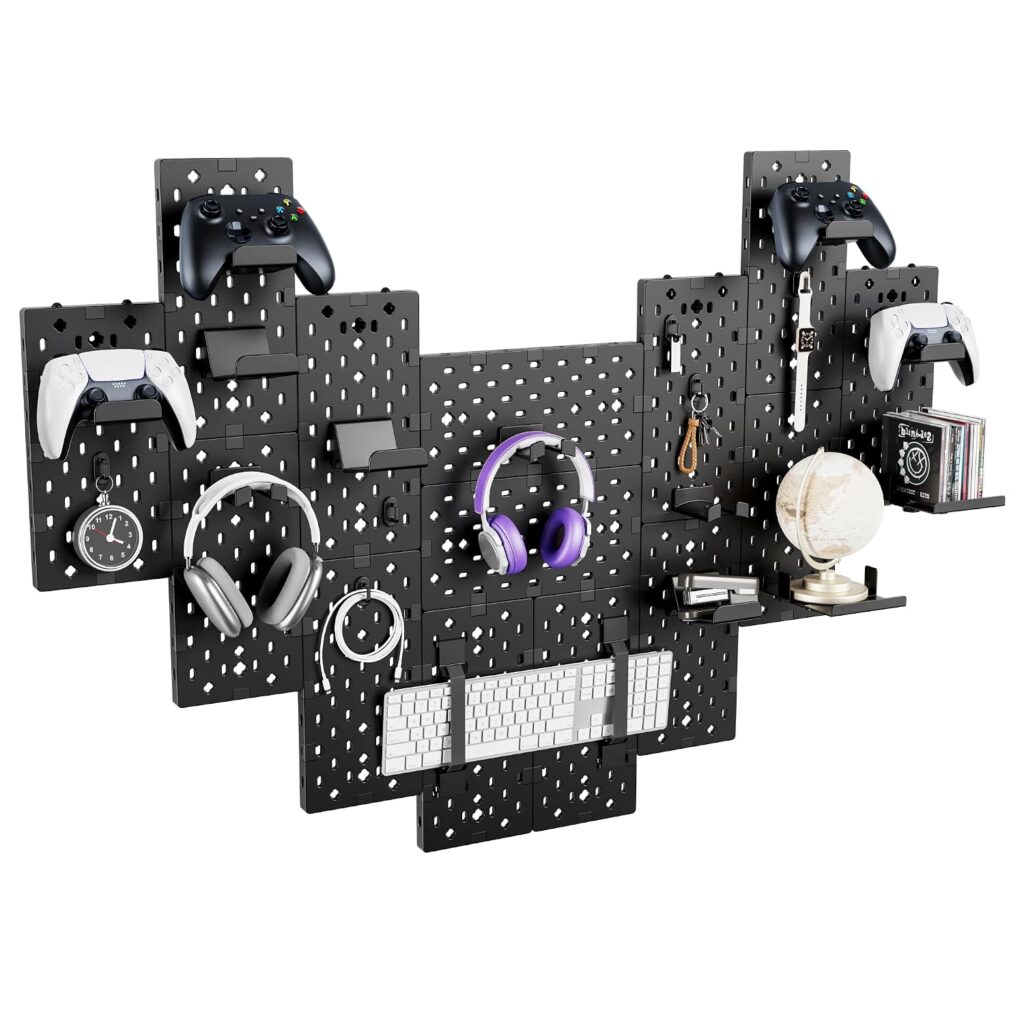
Amazon Find: Gaming Storage Organizer
Small storage organizers can keep controllers, remotes, charging accessories, and other gaming gear together instead of spreading across the TV stand.
5. Leave a Real Open Play Area
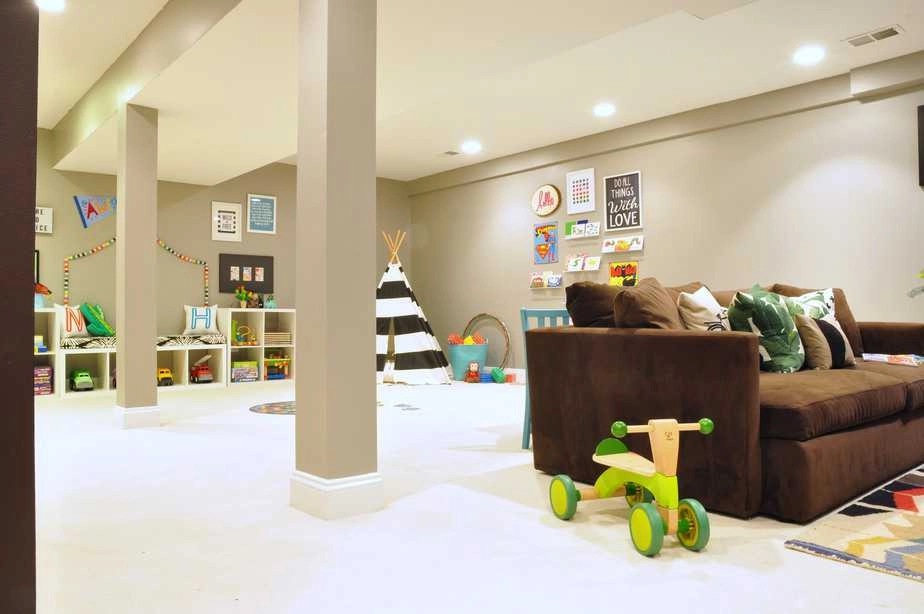
One of the biggest mistakes in a combined game room is filling the room with furniture and leaving no space for actual play. If kids use the room, deliberately protect an open section for building blocks, floor games, indoor activities, or simply moving around.
You do not need to decorate every wall or corner. Sometimes the most useful design decision is leaving an area intentionally empty. That open space can also make the room easier to rearrange as your family’s needs change.
6. Add a Family-Friendly Coffee Table
A coffee table can connect the TV and game portions of the room. Choose one with enough surface area for board games, snacks, books, and drinks without making the walkway around the sofa feel cramped.
For a room used by young children, rounded edges and durable construction can be more practical than delicate glass furniture. A lift-top table can also provide hidden storage or a comfortable surface for tabletop gaming, puzzles, and crafts.
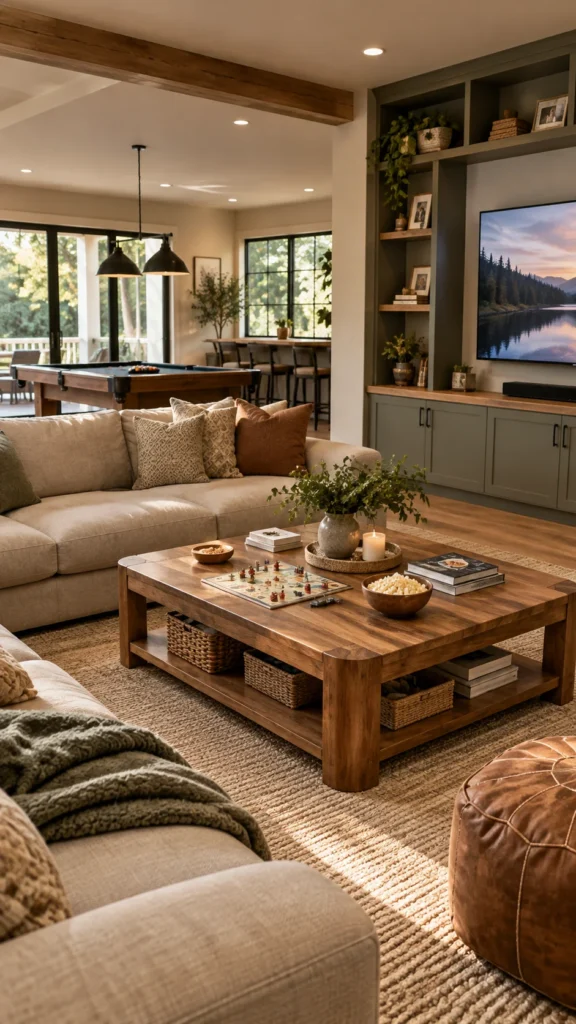
7. Create a Dedicated Board Game Spot
Console gaming does not have to dominate the room. A small table, folding table, or cleared coffee table can become the family board game area. Store games in a nearby cabinet so family members can grab one without searching through closets.
If space allows, choose seating that can be pulled around the table from different parts of the room. This makes the area useful for cards, puzzles, coloring, homework, and snacks as well as traditional board games.
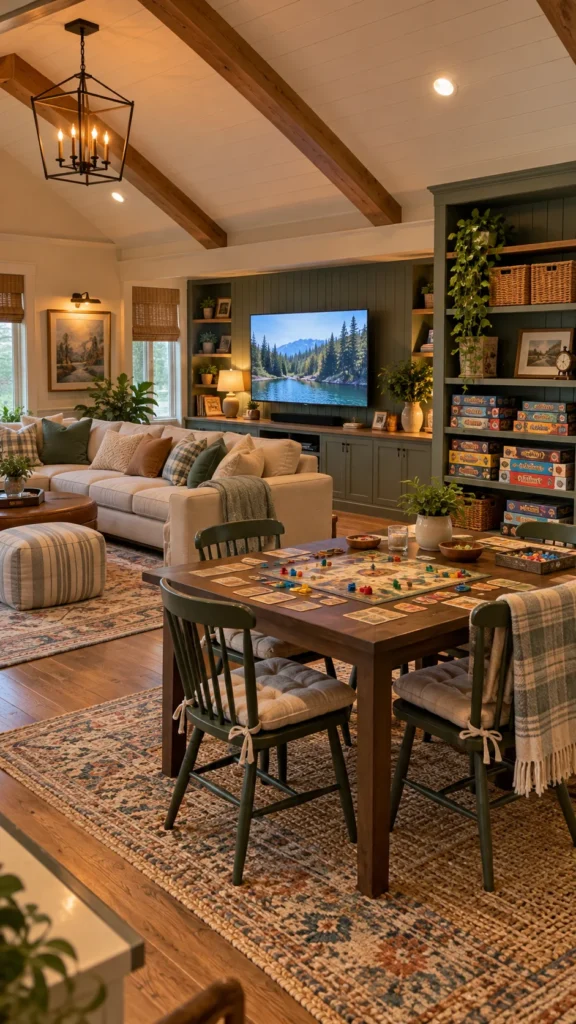
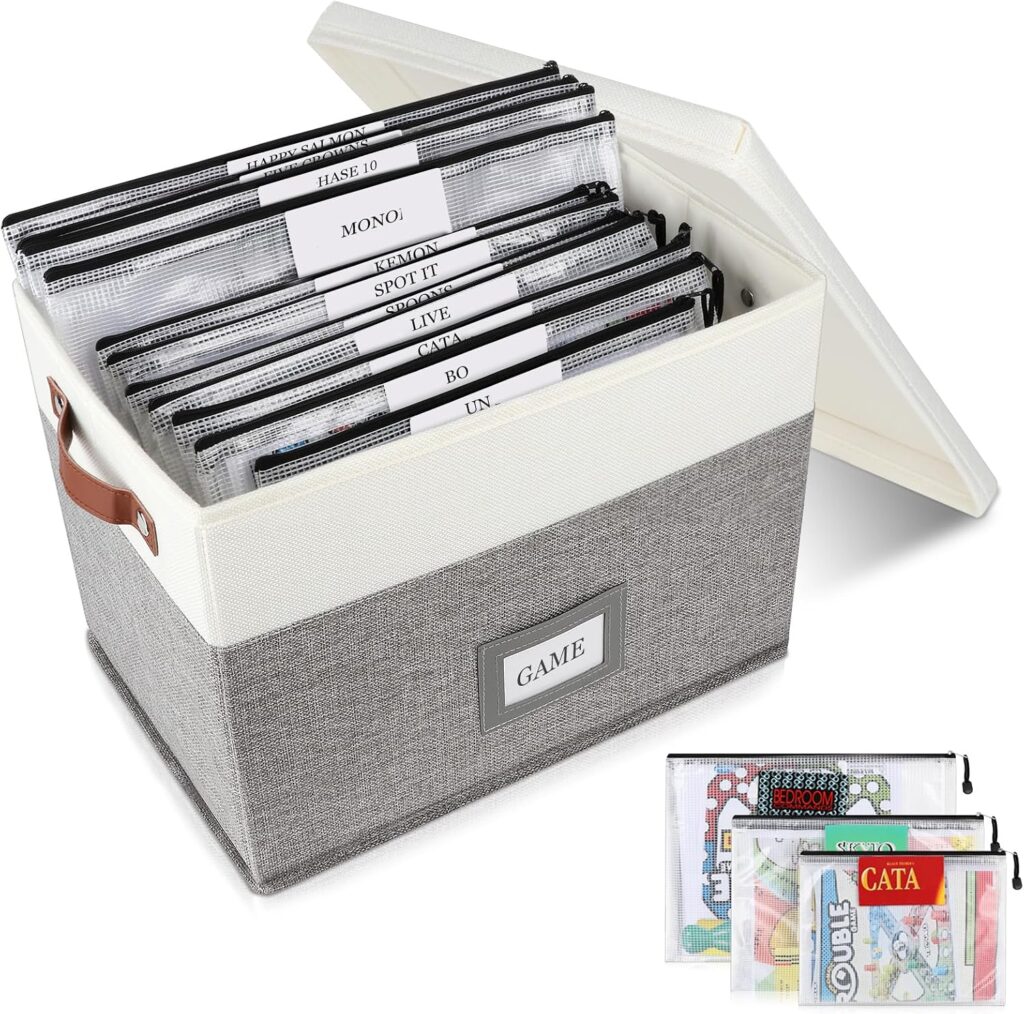
Amazon Find: Board Game Storage
Stackable bins or cube organizers make it easier to keep board games accessible while preventing boxes from taking over the floor.
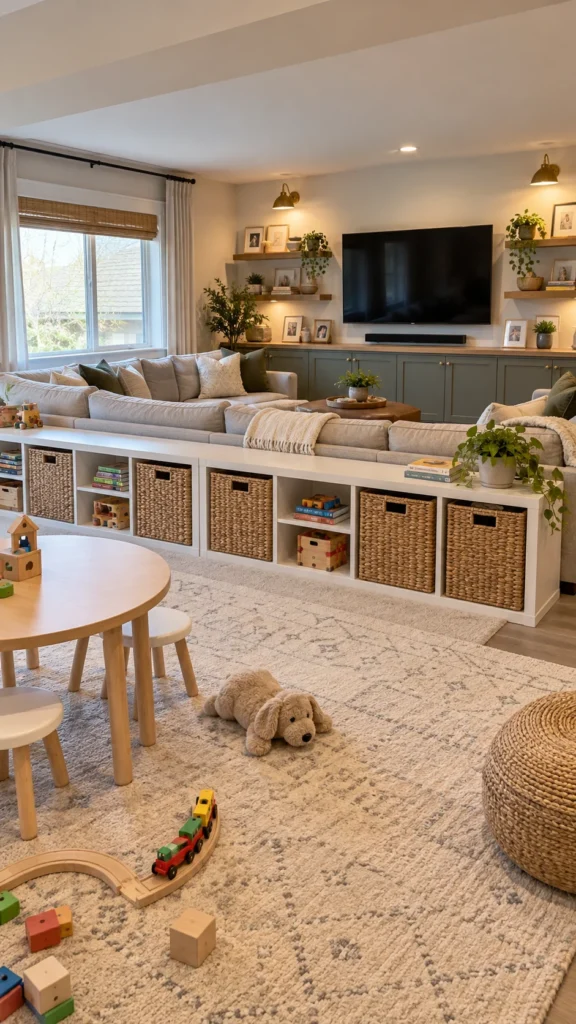
8. Use Storage Benches for Toys and Games
A storage bench can perform several jobs at once. It can provide seating, hide toys, and define the edge of the children’s play area without making the room feel divided. Cube-style shelving with baskets is another useful option because the open compartments can hold both decorative items and everyday toys.
Choose baskets that can be removed easily. The goal is not to create a complicated organizing system but to make putting things away simple enough that everyone in the family can participate.
9. Keep the Decor Fun but Not Overly Childish
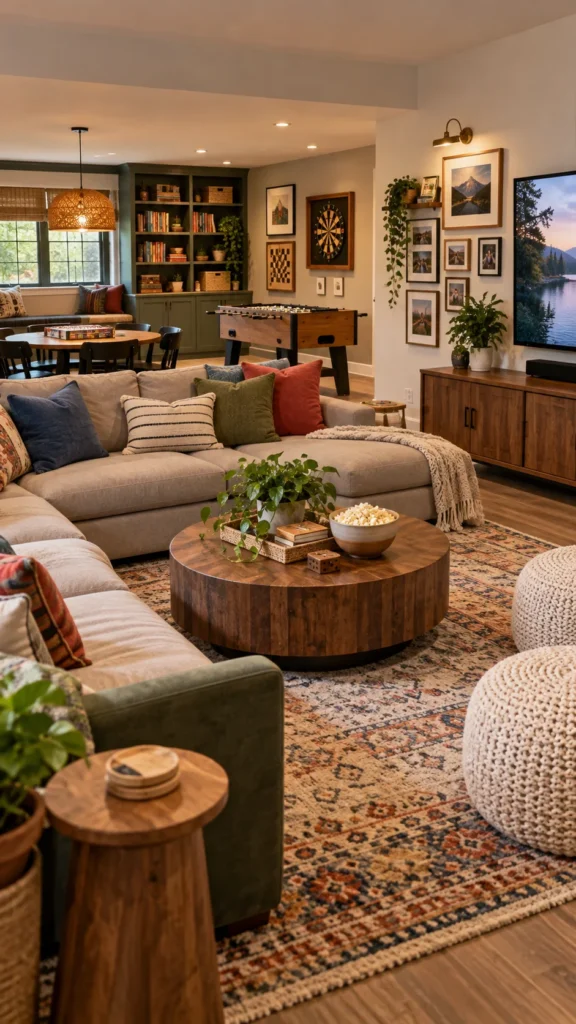
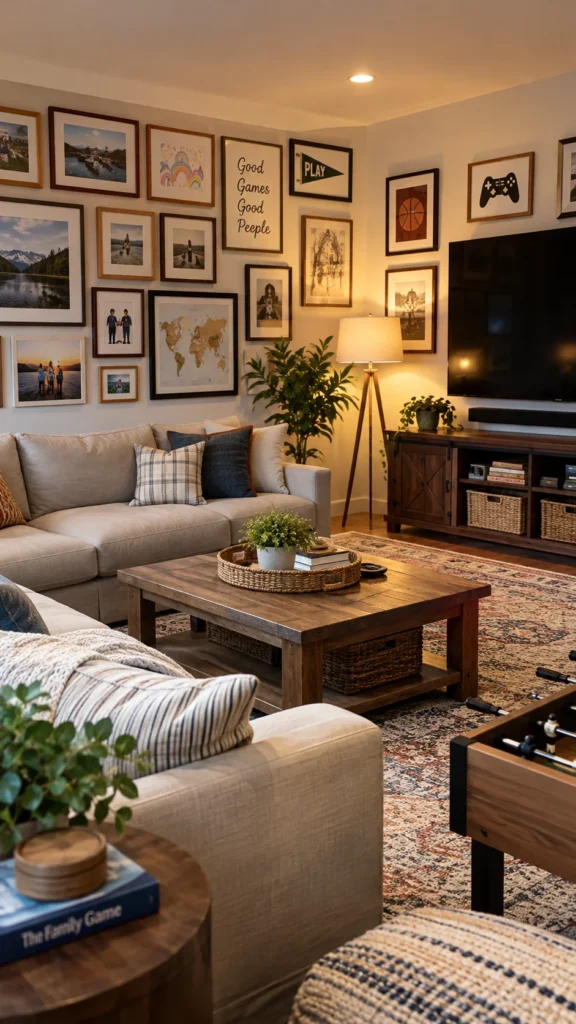
A shared family room needs to feel comfortable for adults as well as kids. Instead of covering every wall with brightly colored characters, create a flexible backdrop using a neutral wall color and add personality through pillows, artwork, games, books, and a few colorful accents.
A family gallery wall is a particularly useful solution. Mix framed artwork, family photos, travel memories, game-inspired prints, or children’s drawings. As interests change, you can replace individual pieces without redesigning the entire room.
10. Choose Durable Materials for High-Traffic Areas
A combined game room and TV room gets more everyday use than a formal sitting room, so prioritize materials that can handle snacks, toys, movement, and frequent cleaning. Performance fabrics, washable covers, sturdy tables, and easy-care flooring can make daily life easier.
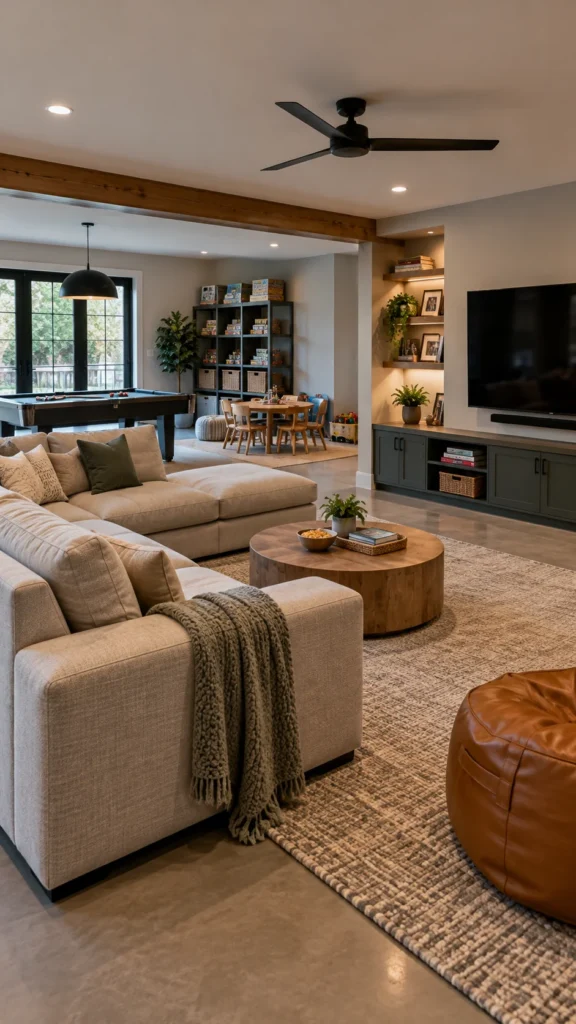
Think about the activities before choosing a rug. A soft rug can make the TV lounge more comfortable, but a large rug may be impractical in an area where children frequently run or move equipment around. Use rugs selectively rather than automatically covering the entire room.
Amazon Find: Washable Area Rug
A washable or easy-care rug can add softness and visual definition to the TV lounge while being more practical for everyday family use.
11. Use Flexible Seating for Different Activities
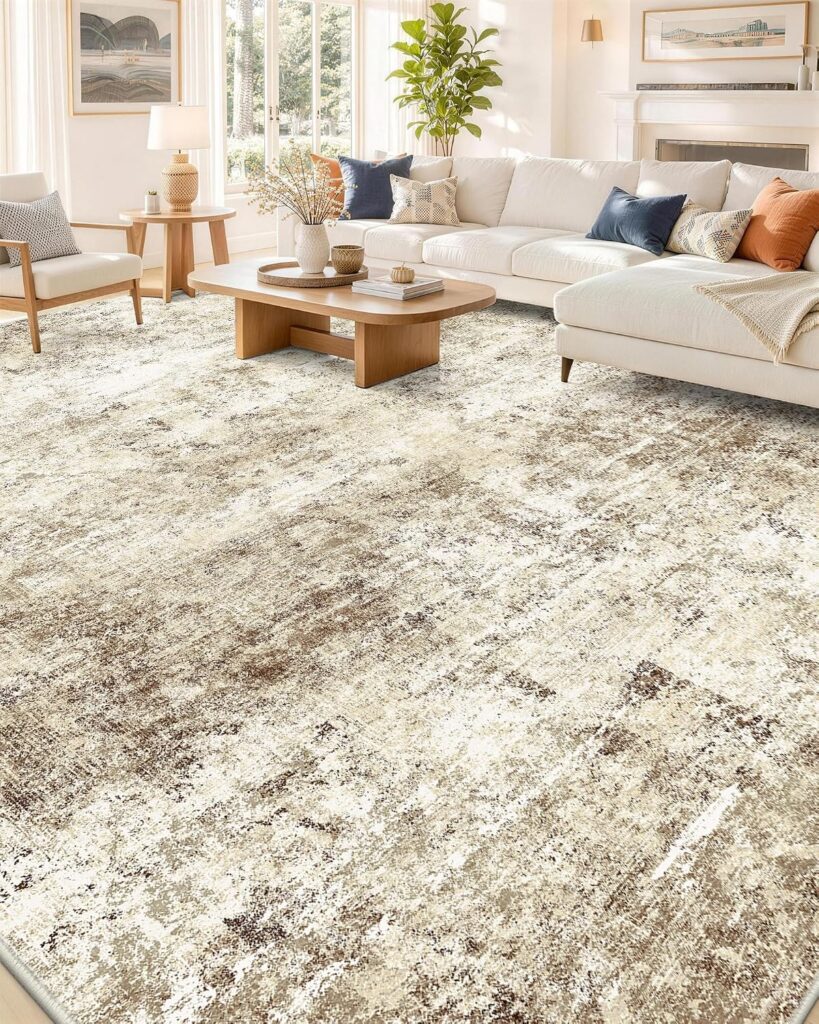
Fixed seating is comfortable, but too much of it can make a multipurpose room difficult to use. Mix your main sofa with lightweight chairs, floor cushions, poufs, or bean bags that can be moved when the family switches from movie night to active play.
Keep a few flexible seats against a wall when they are not being used. That way, the room can instantly open up when someone wants to play a floor game or set up a larger activity.
12. Add a Small Kids’ Table
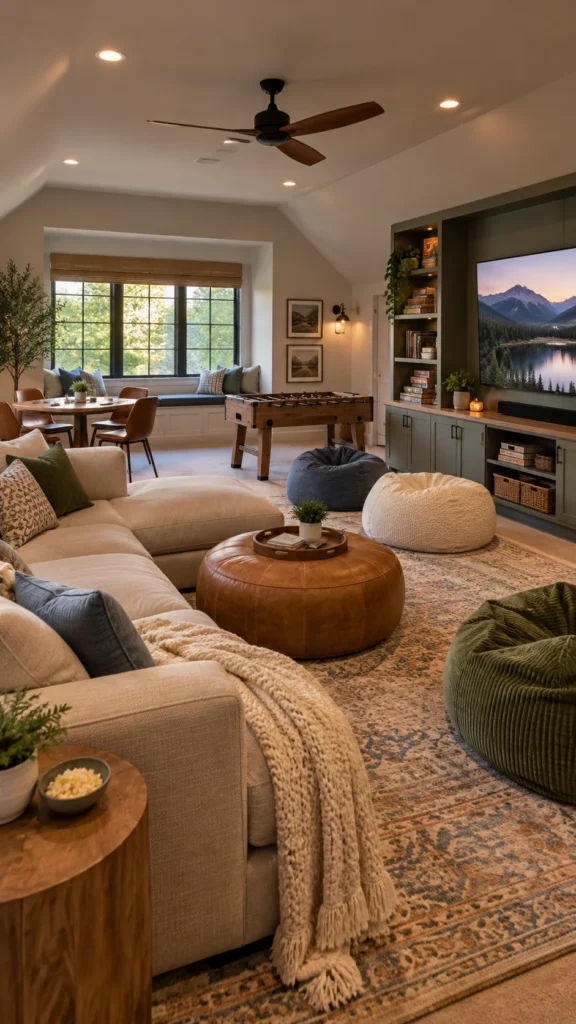
A child-sized table and chairs can create a separate activity zone without requiring another room. It can be used for coloring, puzzles, snacks, crafts, homework, or smaller tabletop games while adults use the nearby TV seating.
Place it along a wall or in a corner rather than directly in the main walkway. Storage baskets underneath or nearby can hold art supplies and small games so the table does not become a permanent pile of unfinished projects.
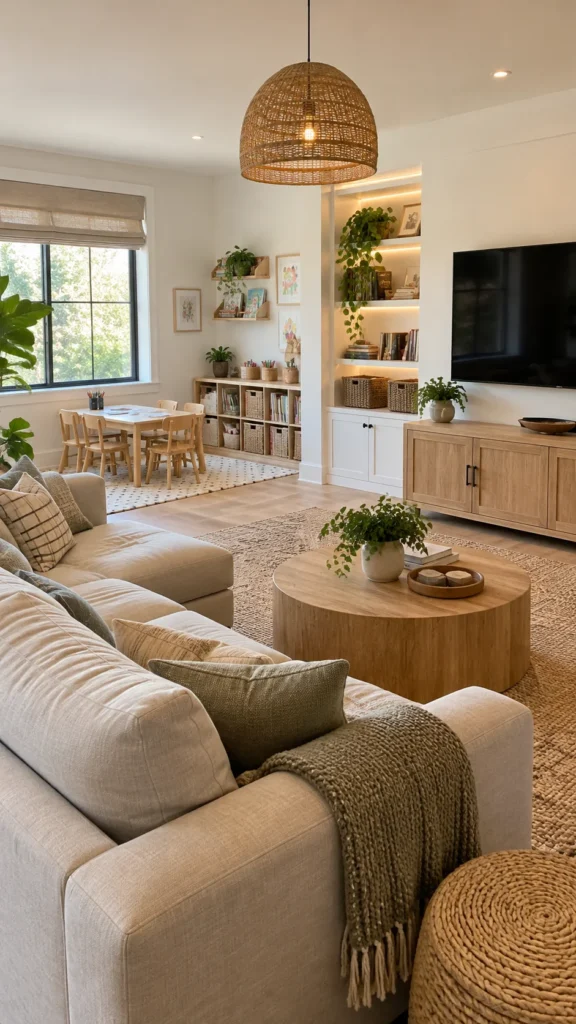
13. Create a Low-Maintenance Entertainment Wall
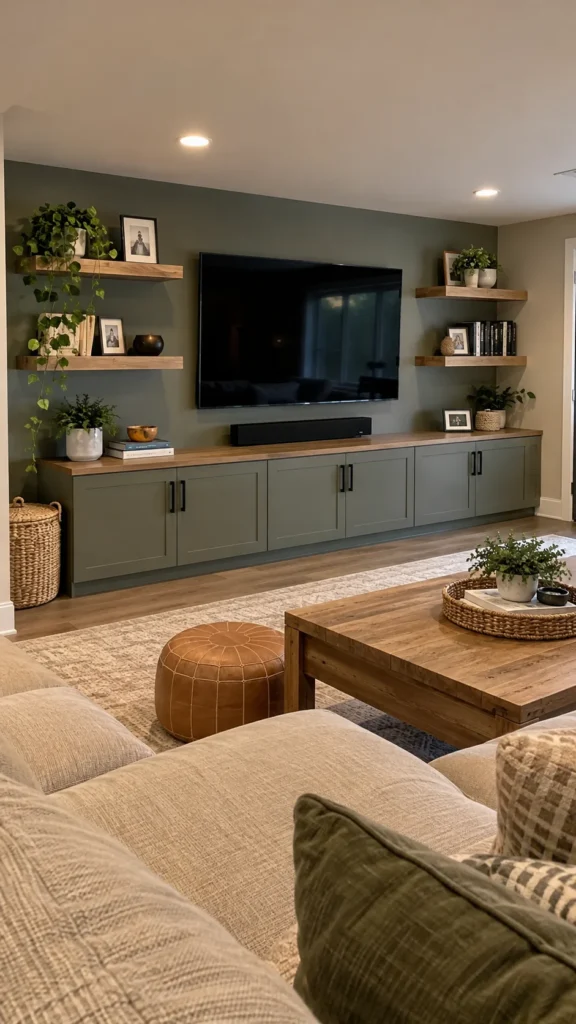
Keep the TV wall simple enough that it can handle all the activities happening around it. A low media console can provide storage for consoles and games, while a few shelves can display books, framed photos, or collectibles.
Avoid putting fragile objects within reach of areas where children play. Decorative pieces that can be knocked over easily are better placed higher up or replaced with lightweight alternatives.
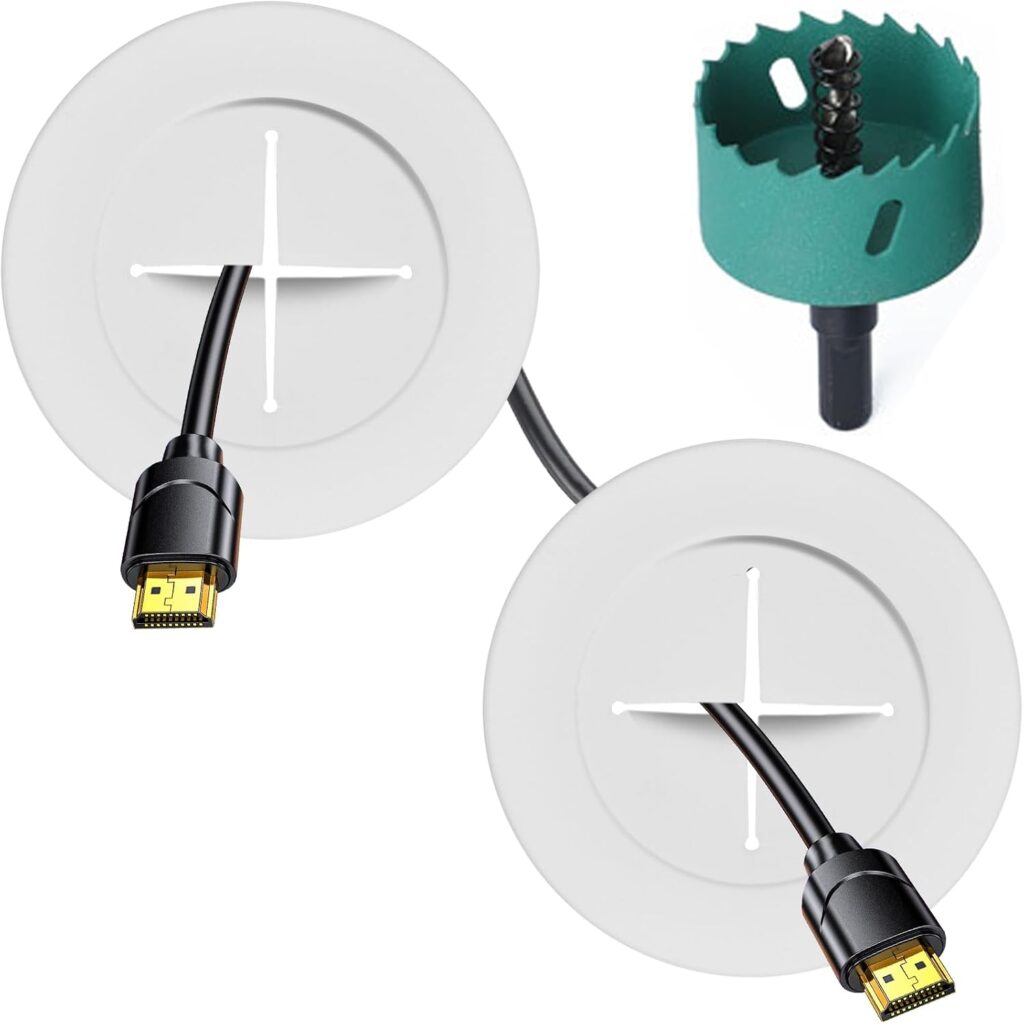
Amazon Find: Cable Management Kit
Cable sleeves, clips, and organizers can keep TV, console, speaker, and charging cables contained behind the entertainment center.
14. Add Family Personality with Artwork
The room will feel more welcoming when some of the decor reflects the people who actually use it. Display family photos, vacation memories, children’s artwork, favorite sports imagery, or a few game-related pieces.
You do not need a perfectly coordinated collection. A simple mix of framed prints and personal objects can make the room feel collected over time. For areas accessible to young children, use sturdy mounting and avoid fragile or sharp decorative objects.
15. Make Lighting Work for Both Gaming and Movie Night
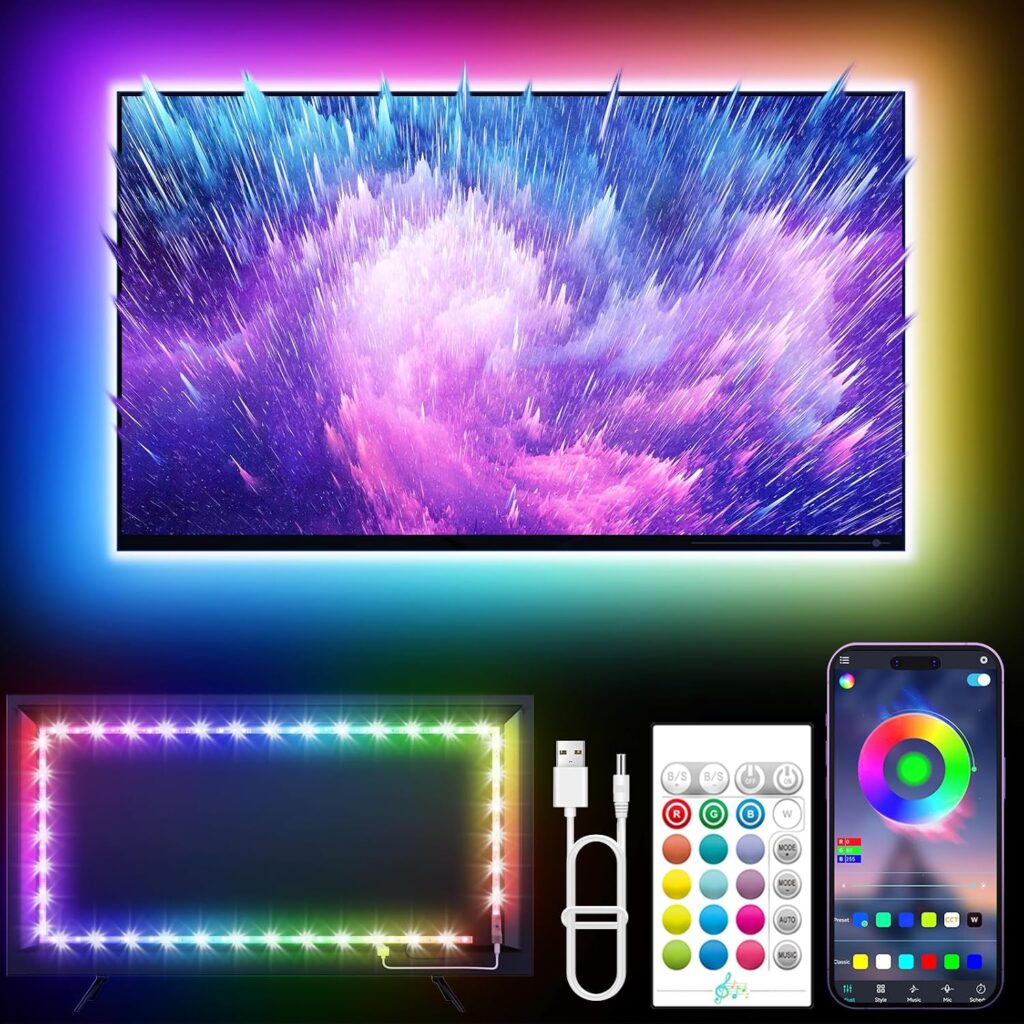
One overhead fixture is rarely enough for a room with multiple uses. Add layers of lighting so the room can change mood depending on the activity. Floor lamps, table lamps, wall lighting, and dimmable accent lights can provide softer illumination when the television is on while still giving enough light for board games or crafts.
Keep bright lights out of the direct viewing angle of the TV. Accent lighting behind the screen or along shelving can also provide atmosphere without requiring additional furniture.
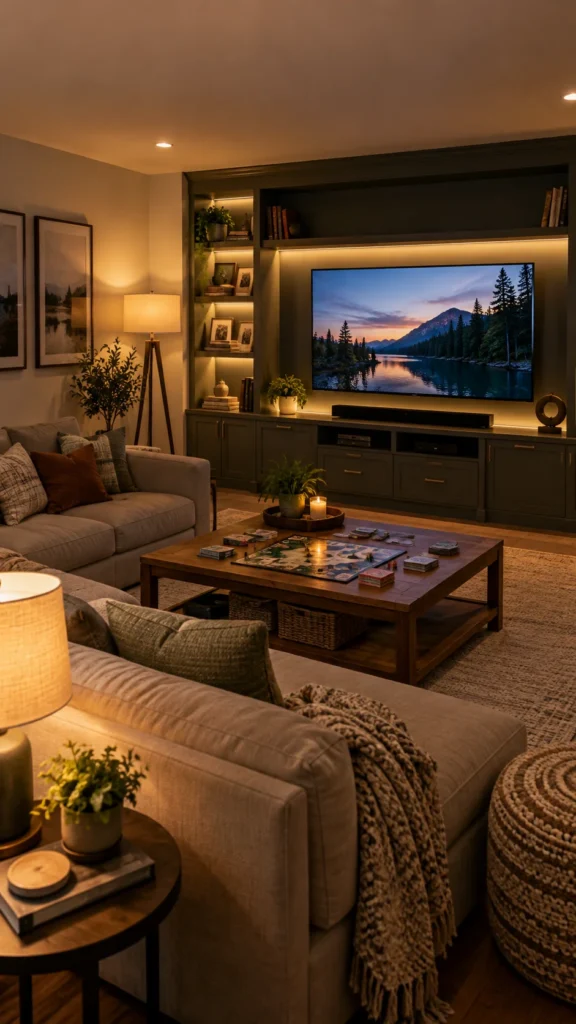
Amazon Find: Dimmable LED Accent Lights
Adjustable accent lighting can add a gaming atmosphere while allowing the family to lower the brightness for movies or increase it for games and activities.
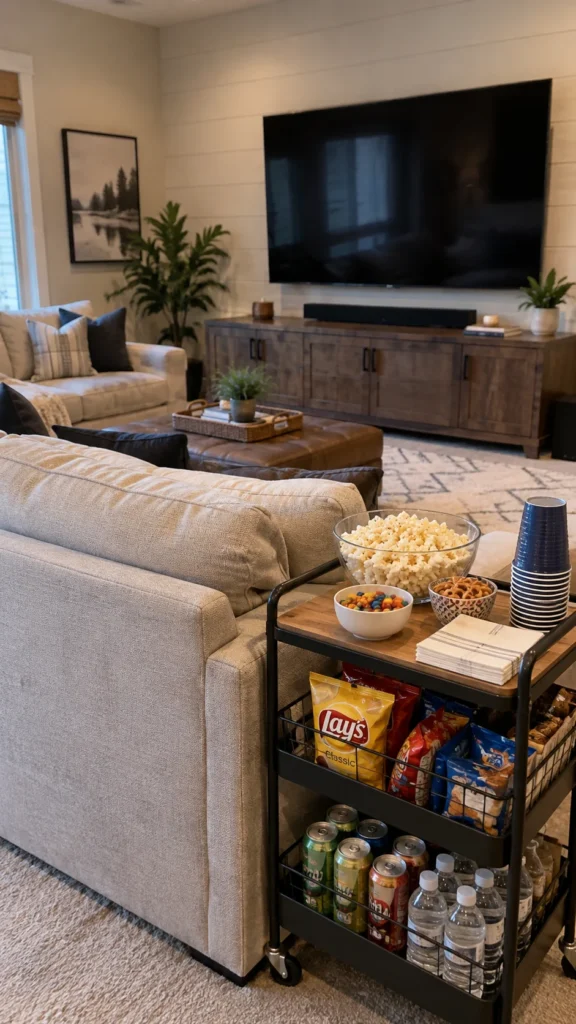
16. Keep Snacks and Drinks Within Reach
Family movie nights and gaming sessions often come with snacks. A narrow rolling cart, small side table, or compact cabinet can create a convenient refreshment station without turning the room into a kitchen.
Keep drinks on stable surfaces away from electronics and power strips. A tray can make it easier to carry snacks into the room and clear them afterward. For younger children, store food and drinks at an appropriate height rather than relying on the gaming desk.
17. Design the Room So It Can Grow with the Family
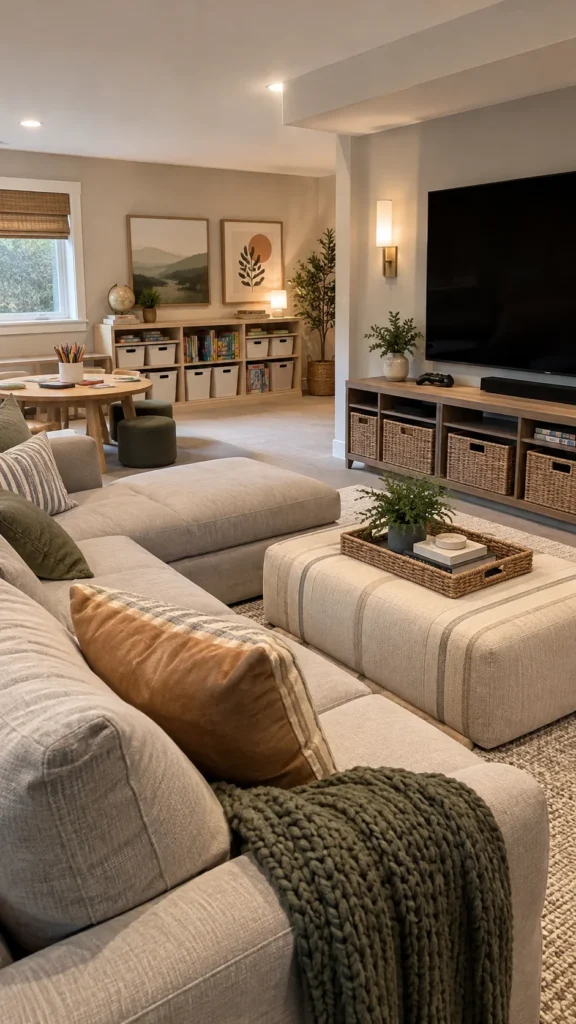
A family game room should not need a complete renovation every few years. Choose a neutral foundation and make the easily changed pieces—pillows, artwork, storage bins, small furniture, and accessories—the places where you add personality.
A room that currently holds toys and children’s games can eventually shift toward a more mature entertainment space. Leave enough flexibility in the layout to replace a play table with additional seating, change the storage system, or add a larger gaming station later.
Shopping Checklist for a Combined Game Room + TV Room
Start with the essentials:
- TV or wall-mounted display
- Comfortable family seating
- Media console or entertainment storage
- Gaming console and controller storage
- Cable management supplies
- One practical surface for snacks and drinks
- Storage baskets or bins
Consider adding:
- Board game table
- Bean bags or floor cushions
- Storage bench
- Washable area rug
- LED accent lighting
- Family gallery wall
- Kids’ activity table
- Rolling storage cart
Before shopping, measure the room and map the main walking paths. Reusing a sofa, bookshelf, storage cube, or side table you already own can also keep the project affordable.
Common Mistakes to Avoid
- Trying to fill every corner: Open space is part of the design, especially in a family room where children play.
- Choosing furniture before measuring: Check width, depth, height, and the clearance needed around each item.
- Making the room too adult-focused: A family space should include comfortable, accessible features for younger users too.
- Using fragile decor in active areas: Keep breakable objects away from running and play zones.
- Ignoring storage: Without a place for controllers, toys, games, and blankets, clutter can quickly overwhelm the room.
- Hiding electronics without ventilation: Consoles and other heat-producing equipment need appropriate airflow.
- Leaving cables across walkways: Route cords along walls or behind furniture and secure them appropriately.
- Overdoing themed decor: A few gaming details usually provide enough personality without making the room difficult to update later.
Frequently Asked Questions
How do you combine a game room and TV room?
Divide the room into functional zones instead of trying to separate it with walls. Place the TV and main seating together, then leave an adjacent area open for gaming, board games, toys, or other activities. Use rugs, furniture placement, lighting, and storage to visually define each zone.
What furniture works best in a family game room?
Choose comfortable seating combined with flexible pieces such as ottomans, storage benches, movable chairs, and compact tables. Furniture with built-in storage is particularly useful because it reduces the number of separate pieces needed in the room.
How can I keep a combined game room organized?
Give each category a designated storage location. Keep controllers near the TV, board games together, toys in labeled baskets, and blankets inside an ottoman or cabinet. The simpler the system, the easier it is for everyone to put things away.
Should a family game room have a rug?
A rug can help define the TV lounge and make the seating area feel warmer. However, it may not be practical in an area where children run, jump, or frequently move equipment. Consider using a rug only under the quieter seating zone instead of covering the entire room.
How can I make the room work for both adults and kids?
Use a neutral base for the walls and larger furniture, then add personality through colorful artwork, pillows, games, books, and flexible accessories. Make sure the room has both comfortable adult seating and accessible areas where children can play, create, or store their belongings.
Final Thoughts
A combined game room and TV room works best when it is designed around how your family actually spends time together. Give the TV area comfortable seating, protect an open section for play, and make storage easy enough that everyone can participate in cleanup.
Start with the layout before buying decor. Once the main zones, walking paths, seating, and storage are working, add the personal details that make the room feel like yours. A family game room does not need to be perfect—it simply needs to be comfortable, practical, and ready for the next movie night, gaming session, board game, or afternoon of play.
