
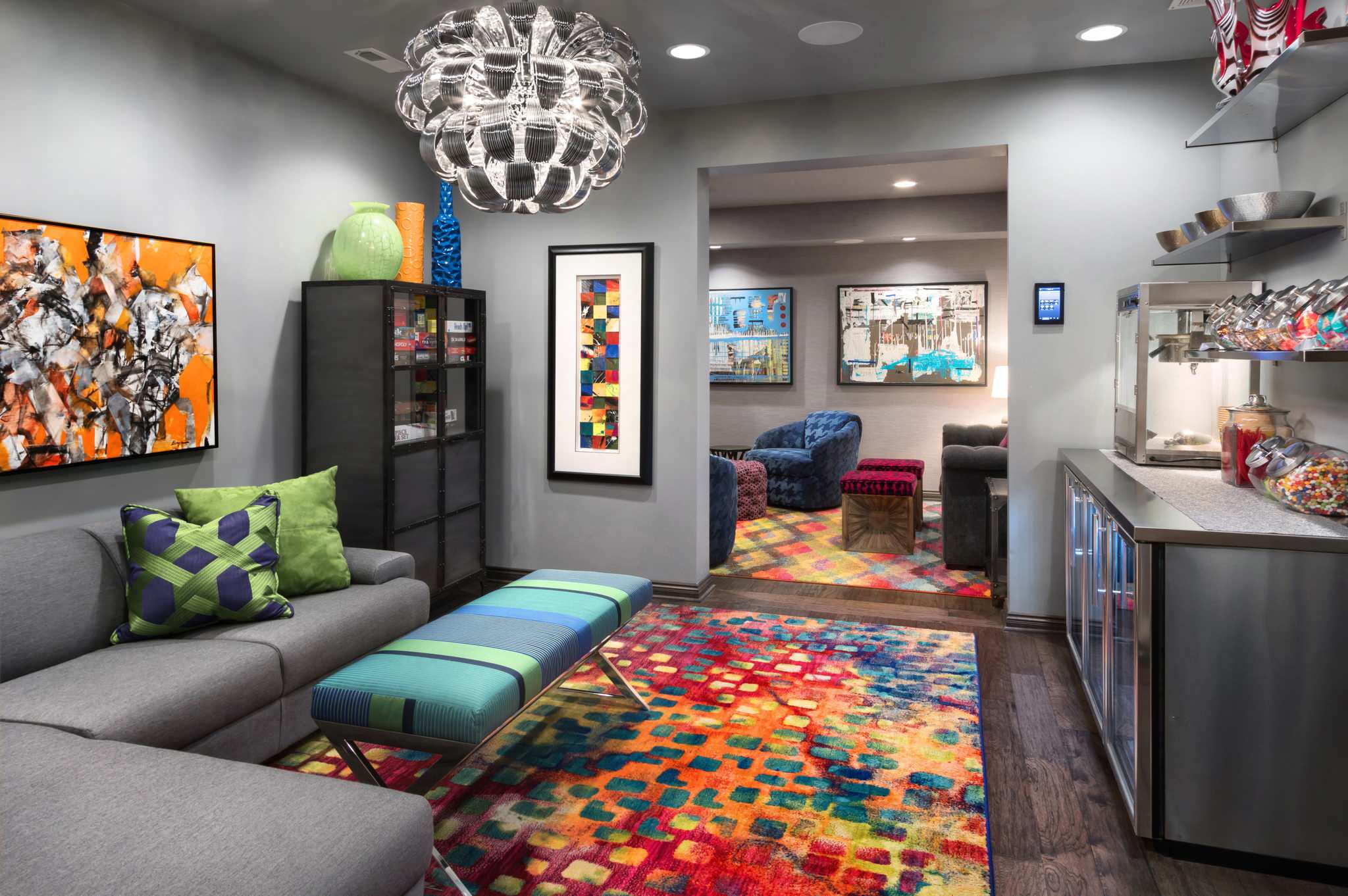

A teenager’s game space can be much more than a desk with a monitor. With the right layout, it can become a comfortable place to play, relax, study, listen to music, hang out with friends, and show off the hobbies and interests that make the room feel personal.
These game space ideas for teenagers focus on practical layouts, personalized decor, smart storage, flexible lighting, and technology that fits naturally into the room. The goal is to create a setup that feels cool and personal now while remaining easy to update as interests change.
16 Game Space Ideas at a Glance
- Dedicated Gaming Desk Wall
- Cozy Console Gaming Corner
- LED Accent Gaming Setup
- Gaming and Study Zone
- Dual-Monitor Teen Gaming Station
- Small-Space Corner Desk Setup
- Gaming Display Wall
- Personalized Gaming Gallery
- Under-Bed Gaming Storage
- Bean Bag Gaming Lounge
- Headphone and Controller Station
- Minimalist Black Gaming Setup
- Colorful RGB Gaming Space
- Gaming Nook with a TV
- Flexible Gaming and Hangout Zone
- Gaming Space That Grows with the Teen
How to Plan a Teen Gaming Space
| Area | Useful Choice | Practical Tip |
|---|---|---|
| Gaming desk | Compact desk with cable management | Measure monitor depth before buying |
| Lighting | LED strips and adjustable task lighting | Use several layers rather than one harsh light |
| Storage | Shelves, drawers, and bins | Keep frequently used gear within reach |
| Decor | Artwork, collectibles, and removable accents | Choose pieces that can be changed later |
| Seating | Gaming chair, bean bag, or compact lounge chair | Leave enough clearance to move around comfortably |
16 Game Space Ideas for Teenagers
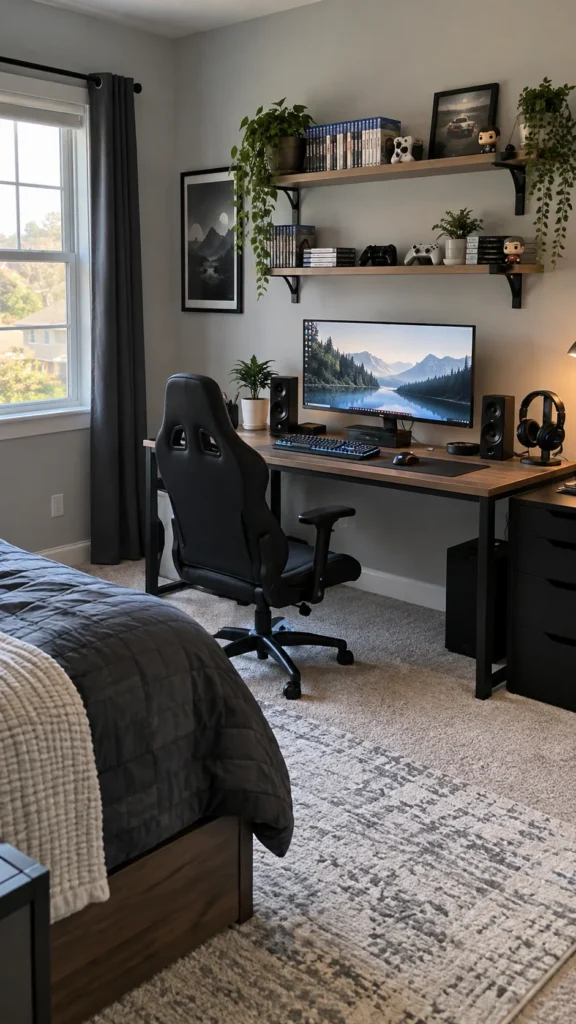
1. Create a Dedicated Gaming Desk Wall
Turn one wall into the main gaming station by placing a desk directly against it and building the rest of the setup upward.
A monitor, keyboard, mouse, speakers, and headphones can stay concentrated in one area while shelves above the desk provide room for games and collectibles.
Choose a neutral desk and let accessories provide the personality. This arrangement is especially useful in a bedroom because it keeps the gaming equipment contained instead of spreading across the room.
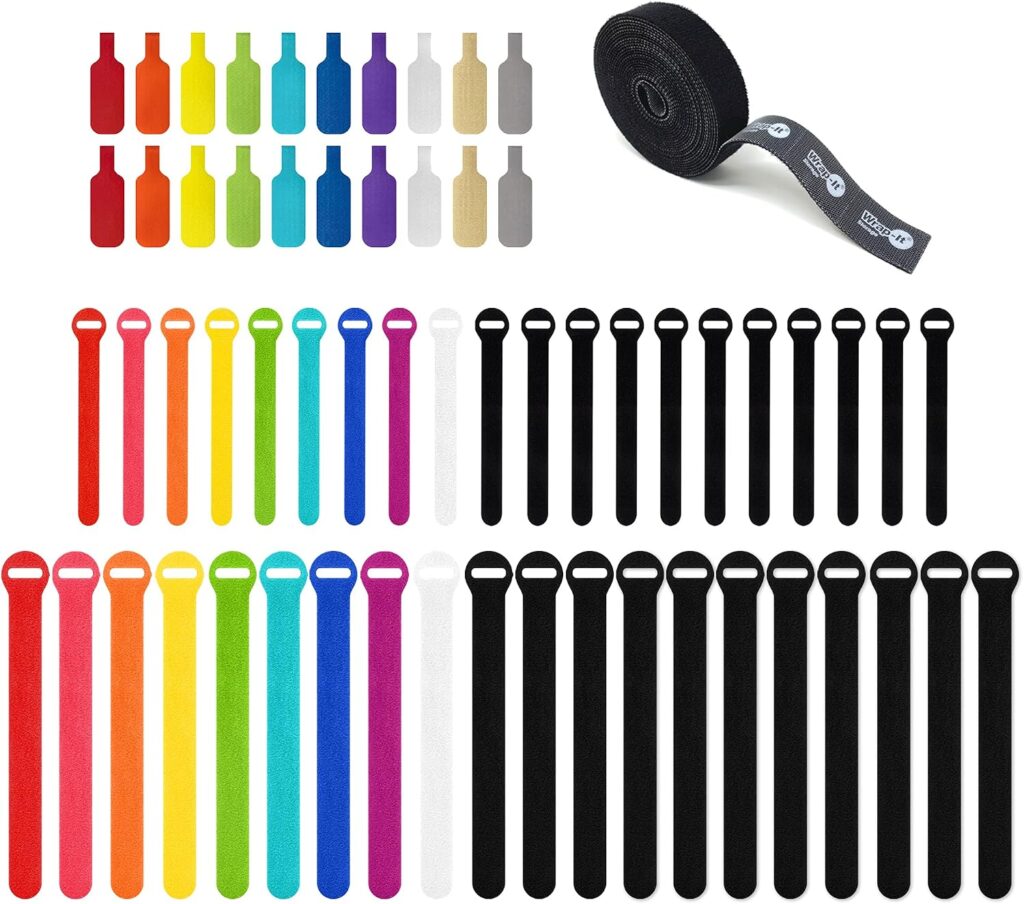
Amazon Find: Gaming Desk Cable Organizer
Cable clips and organizers can help keep charging cords, monitor cables, and accessories routed neatly around the gaming desk.
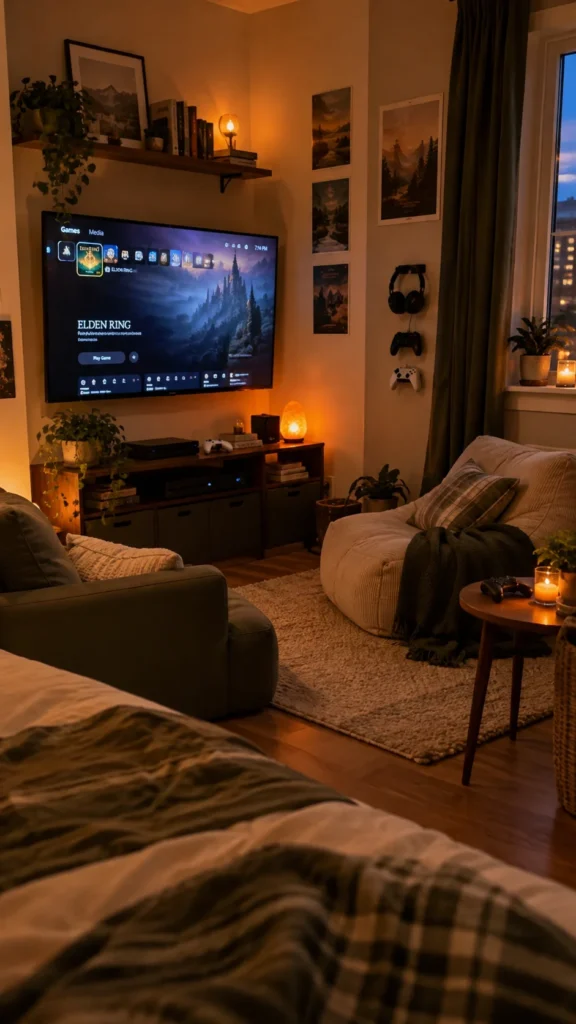
2. Build a Cozy Console Gaming Corner
A teenager who prefers console gaming can use a corner of the bedroom as a comfortable TV gaming zone.
Mount the TV or place it on a compact media console, then add a lounge chair, floor cushion, or small sofa nearby. Keep games and controllers in drawers underneath the screen.
A small rug can visually separate this corner from the rest of the bedroom without requiring another piece of furniture.
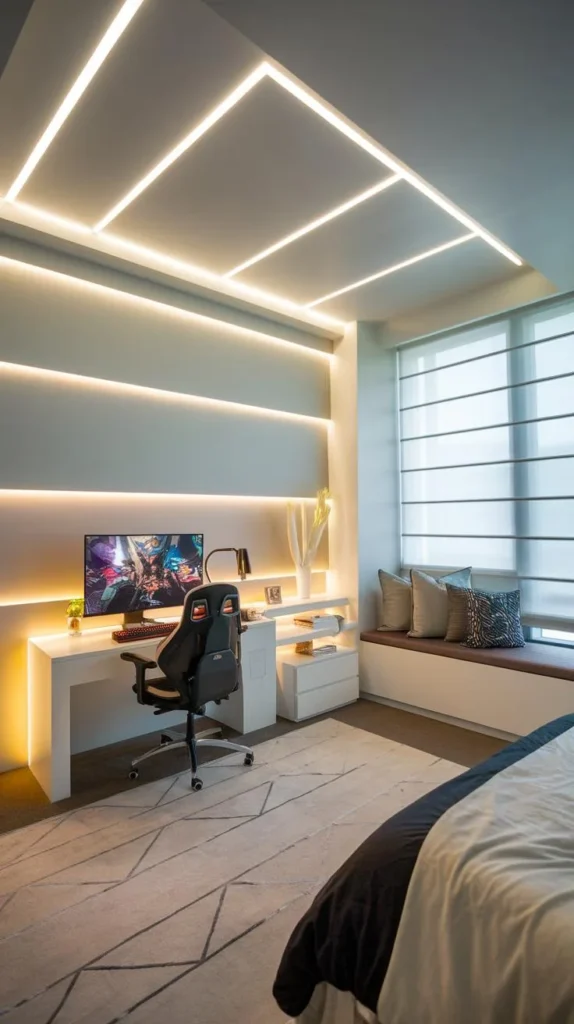
3. Add LED Accent Lighting
Lighting is one of the easiest ways to give a teen gaming area its own personality.
Install LED strips behind the monitor, underneath shelves, or along the back of the desk to create a soft glow. Instead of putting lights everywhere, choose one or two focal areas.
Adjustable brightness is useful because the same room may need stronger lighting for homework and softer illumination for gaming.
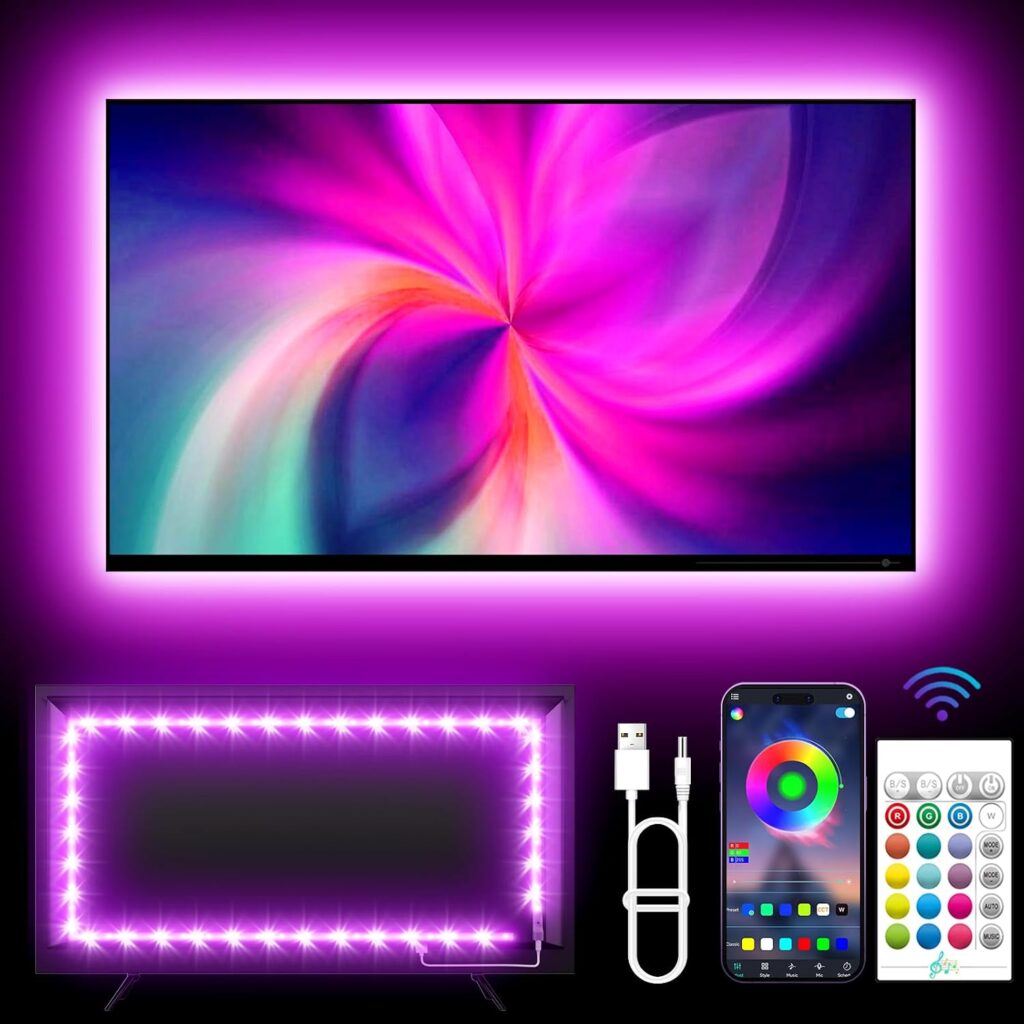
Amazon Find: LED Gaming Light Strips
LED strips can add color behind a desk, monitor, TV, or shelf without taking up valuable floor space.
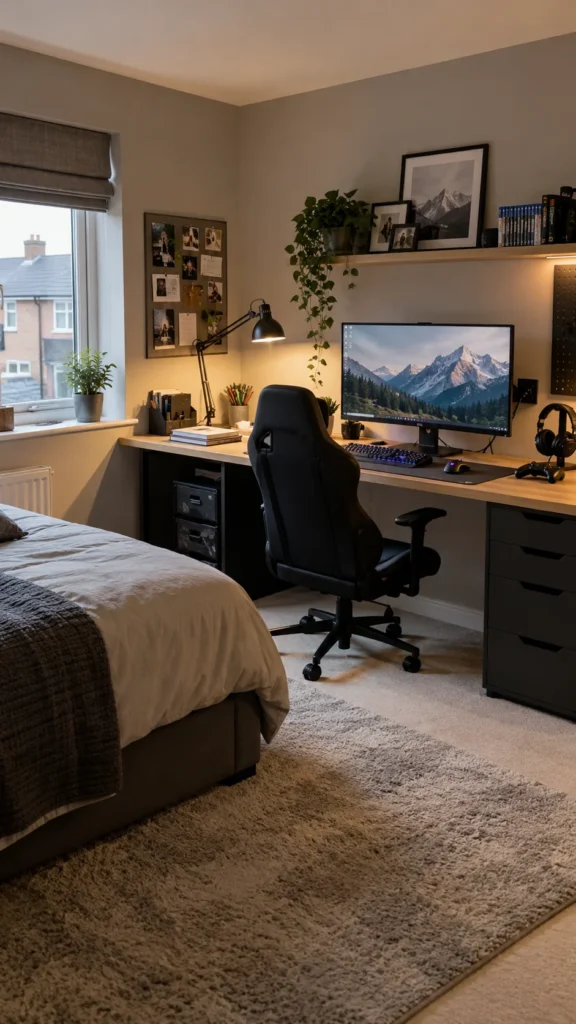
4. Combine Gaming with a Study Zone
For a teenager’s bedroom, combining gaming and studying in one well-planned workstation can save space.
Use a desk large enough for a monitor and school supplies, then create separate zones on the desktop.
Keep notebooks and study materials in one drawer or organizer while gaming accessories stay on the other side. A desk lamp with adjustable positioning can provide focused light for homework without changing the rest of the room.
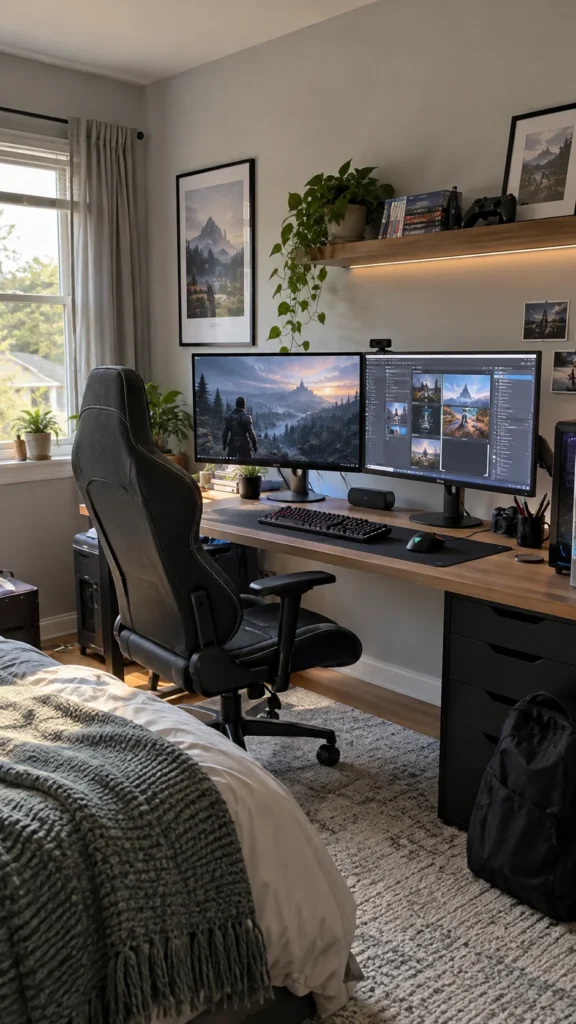
5. Try a Dual-Monitor Gaming Station
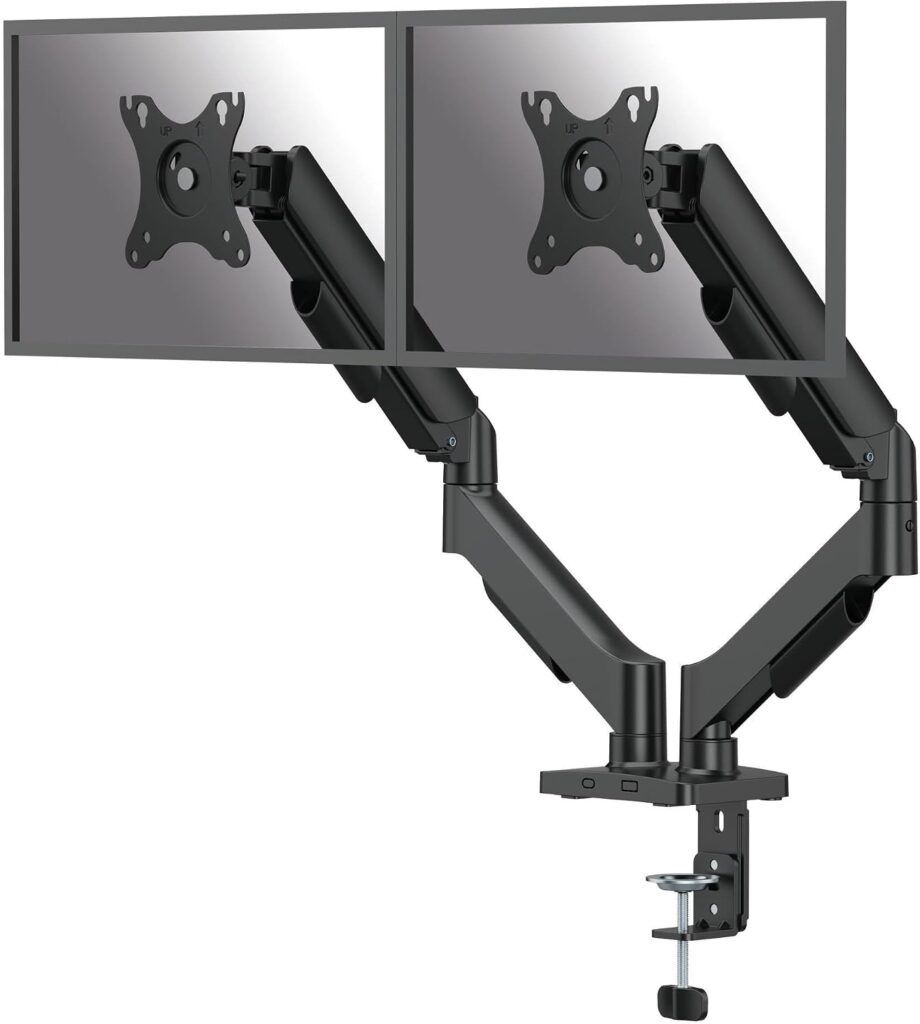
If the available desk is wide enough, two monitors can create a focused PC gaming and creative workstation.
One screen can be used primarily for gaming while the second can support streaming tools, music, communication, schoolwork, or other applications. Keep the monitors aligned at comfortable heights and make sure the desk can safely support the equipment.
Monitor arms can also free up some desktop space when appropriately installed.
Amazon Find: Monitor Arm
A suitable monitor arm can help free desk space and make it easier to position one or more displays without using large monitor stands.
6. Make the Most of a Corner Desk
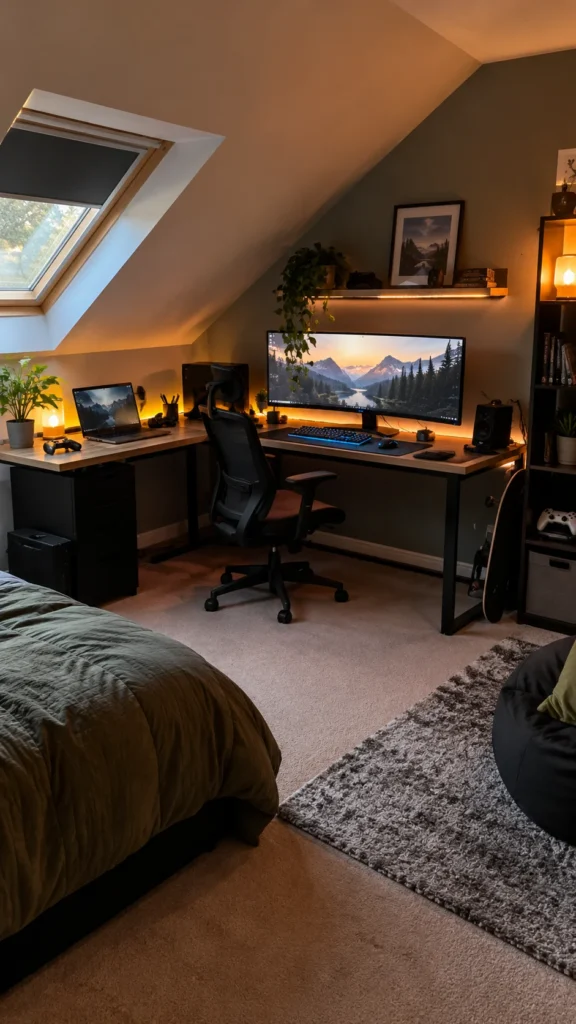
Corners are often wasted in bedrooms, making them ideal for a dedicated game space.
An L-shaped desk can provide plenty of surface area while keeping the rest of the room open. Place the main monitor on the longest side and use the shorter section for a laptop, speakers, notebooks, or controllers.
If an L-shaped desk is too large, two compact desks can sometimes create a similar arrangement.
7. Turn a Wall into a Gaming Display
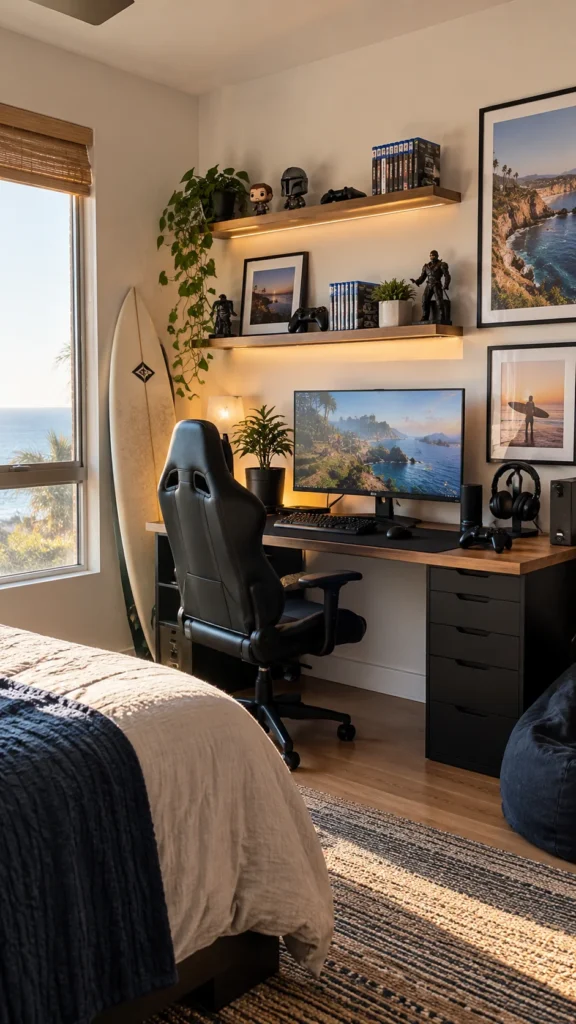
Give the gaming space a visual focal point by using the wall behind the desk for display.
Floating shelves can hold collectible figures, game cases, headphones, small plants, or framed artwork. Keep the arrangement relatively simple so the wall does not become visually overwhelming. A few favorite items can communicate a teenager’s interests more effectively than covering every available surface.
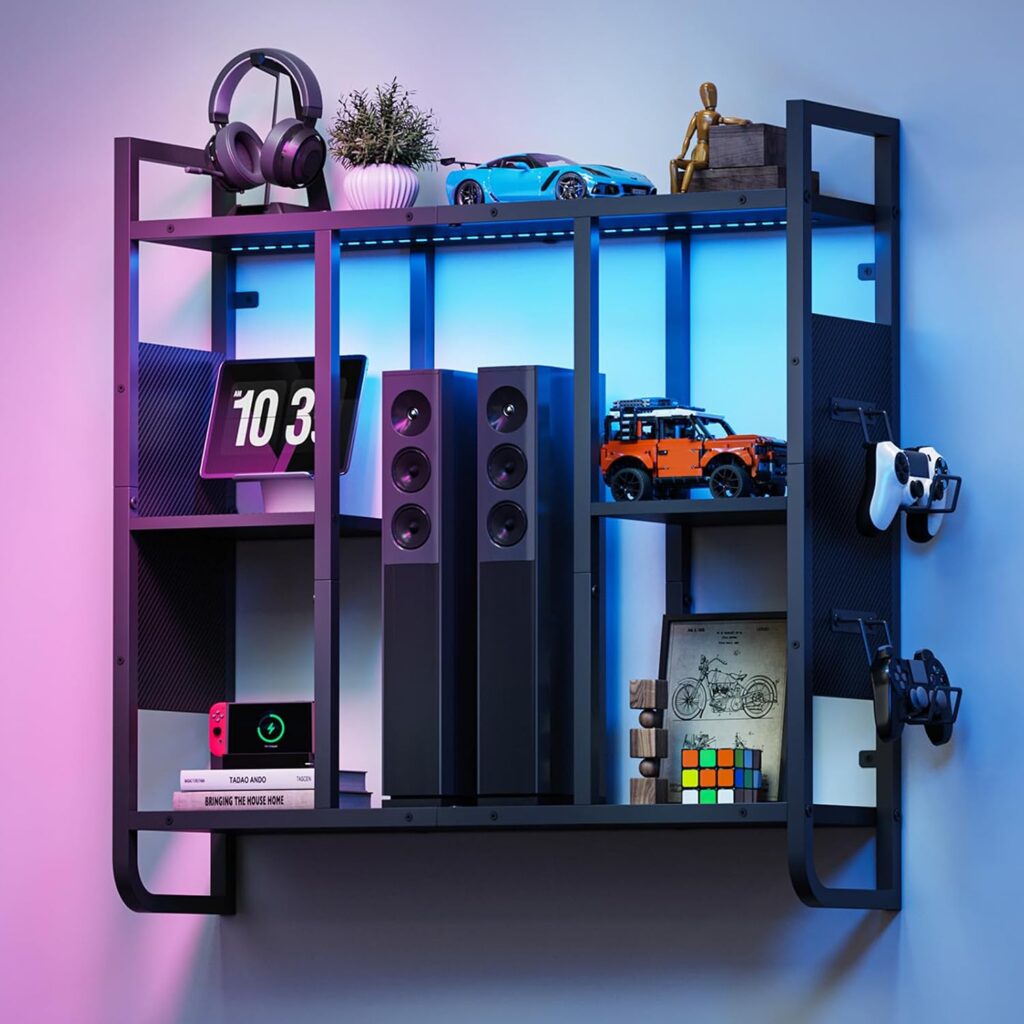
Amazon Find: Floating Display Shelves
Wall shelves provide display and storage without using floor space, making them especially useful in smaller bedrooms.
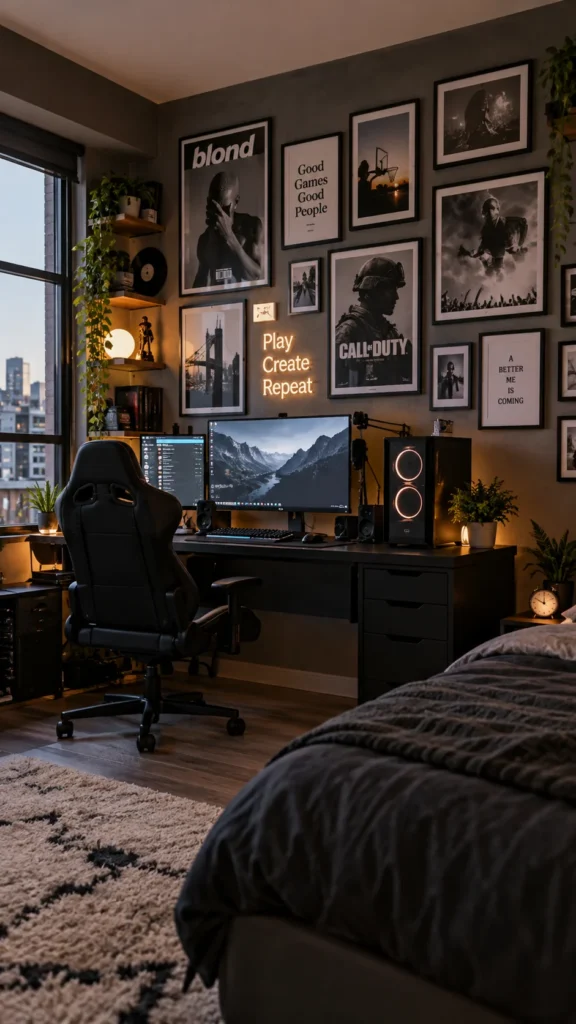
8. Create a Personalized Gaming Gallery
Instead of relying entirely on branded gaming decor, build a gallery that reflects the teenager’s broader interests.
Mix framed game artwork with music posters, photography, sports imagery, favorite quotes, or personal photos.
Use matching frames to make different images feel connected. Removable hooks or poster-hanging solutions can be useful when the room needs to evolve without making permanent changes to the walls.
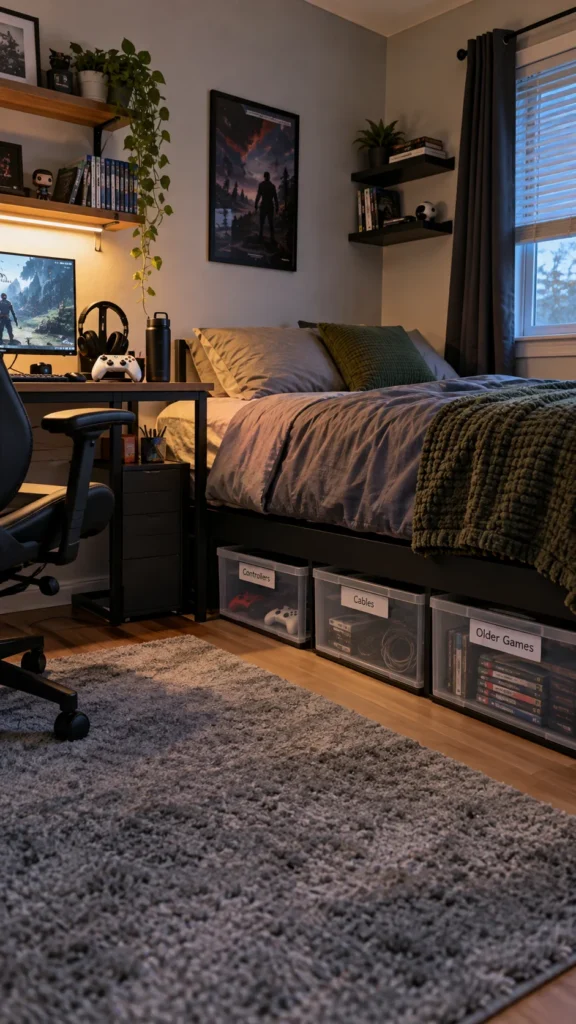
9. Use Under-Bed Storage for Gaming Gear
If the gaming setup is in a bedroom, do not overlook the storage space underneath the bed.
Low bins can hold extra controllers, cables, older games, seasonal accessories, or equipment that is not used every day. Label containers so finding something does not require pulling everything out. This keeps the desk and shelves reserved for the gear the teenager uses most frequently.
10. Add a Bean Bag Gaming Lounge
A bean bag creates an informal seating area for console gaming, watching videos, reading, or hanging out with friends.
It is also easy to move when the floor needs to be cleared. Choose a size that fits comfortably without blocking doors or walkways. A washable cover can be particularly practical for a room where snacks and drinks are often nearby.
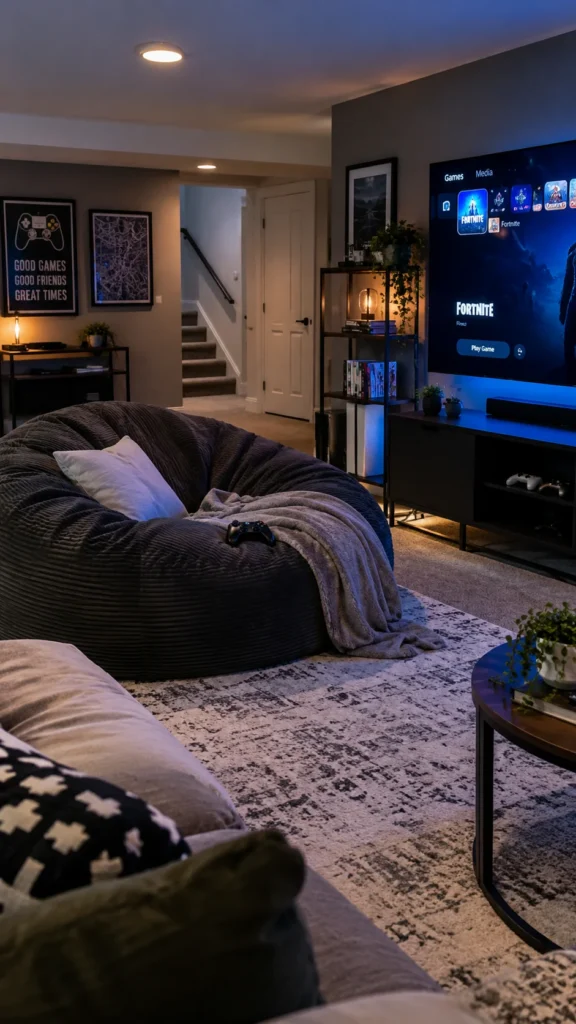
Amazon Find: Teen Gaming Bean Bag
Flexible lounge seating gives a teenager another place to relax or play without permanently taking up as much room as a traditional chair.

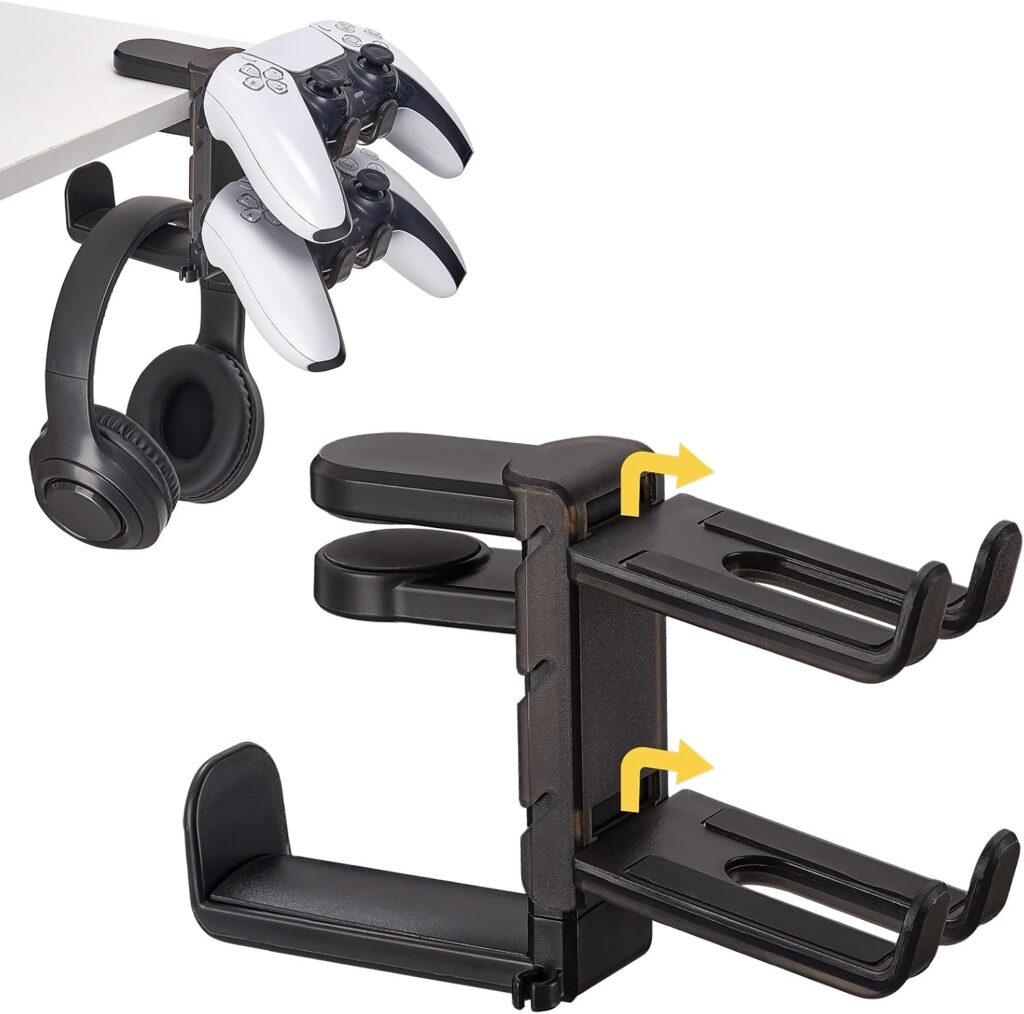
11. Give Headphones and Controllers a Home
Small accessories can create surprisingly large amounts of clutter. Add a dedicated place for headphones, controllers, charging cables, and handheld devices.
A small wall-mounted organizer, pegboard, or drawer insert can keep these items easy to find. Place the storage within arm’s reach of the gaming desk so putting equipment away becomes part of the normal routine rather than another chore.
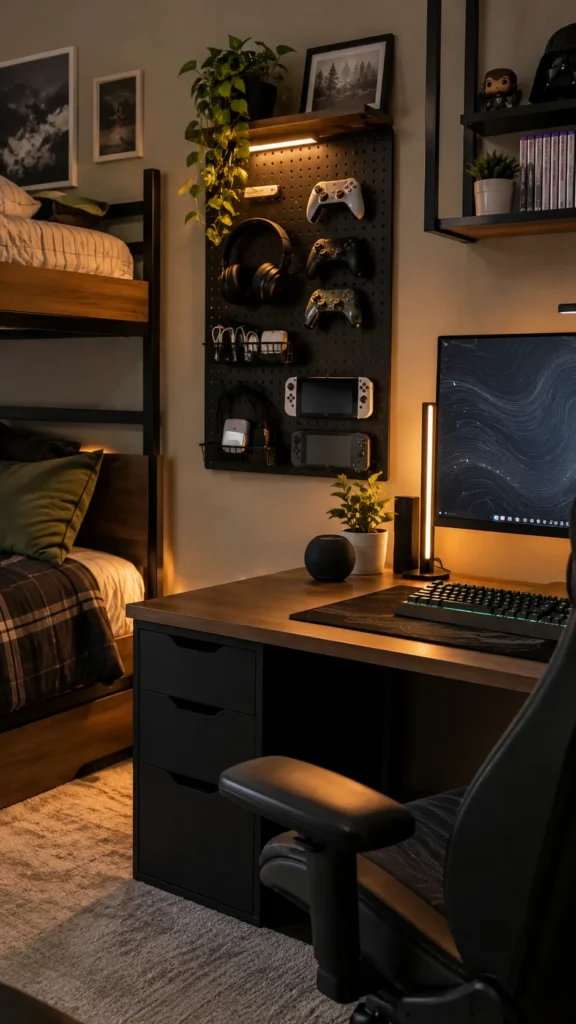
Amazon Find: Gaming Headset Holder
A headset stand or under-desk holder keeps headphones off the desktop and gives them a consistent storage spot.
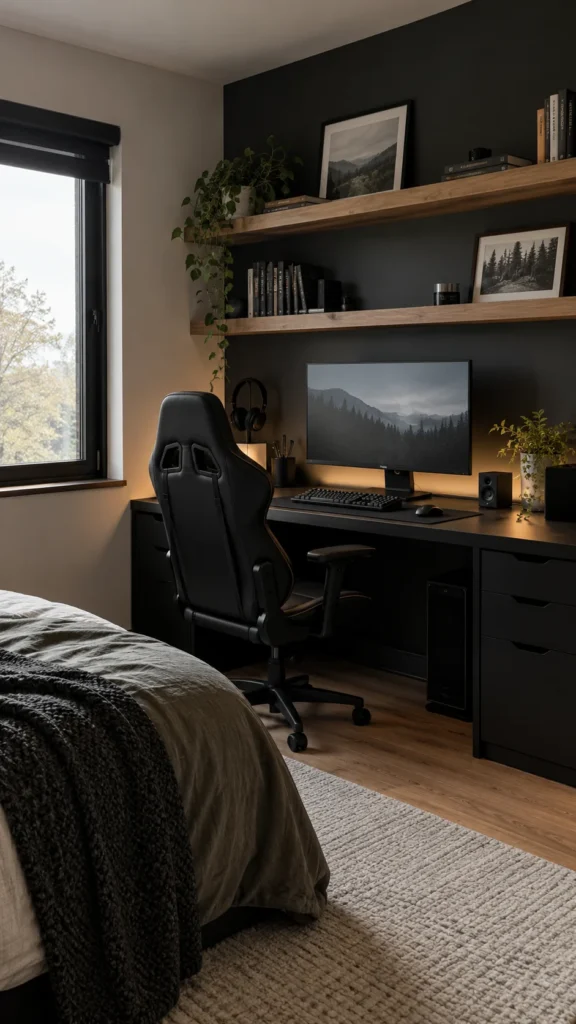
12. Try a Minimalist Black Gaming Setup
For a more mature look, build the gaming area around black, charcoal, white, or natural wood.
A dark desk, black chair, and simple monitor setup can provide a clean backdrop for a few carefully selected accessories. Add warmth through wood shelves, neutral textiles, or a small plant. This approach can make the gaming area feel like part of the bedroom rather than a separate themed installation.
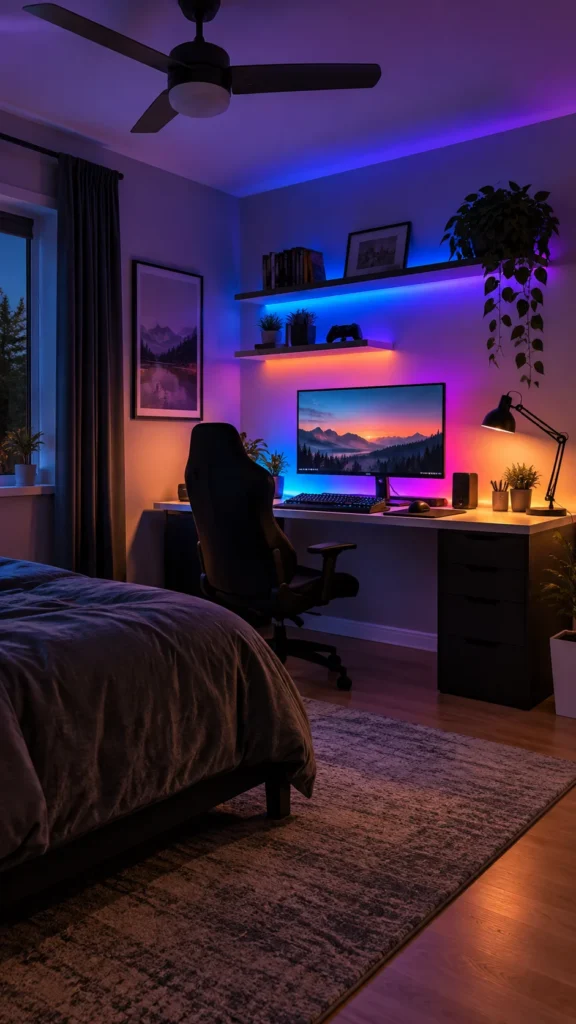
13. Make RGB Lighting the Main Accent
A colorful gaming setup can use RGB lighting as the main decorative element instead of adding lots of themed objects.
Place adjustable lights behind the desk, underneath shelves, or around the back of a monitor. Keep the larger furniture pieces relatively simple so the changing colors remain the visual focus. If the room is also used for studying, make sure there is a separate task light that provides appropriate illumination for desk work.
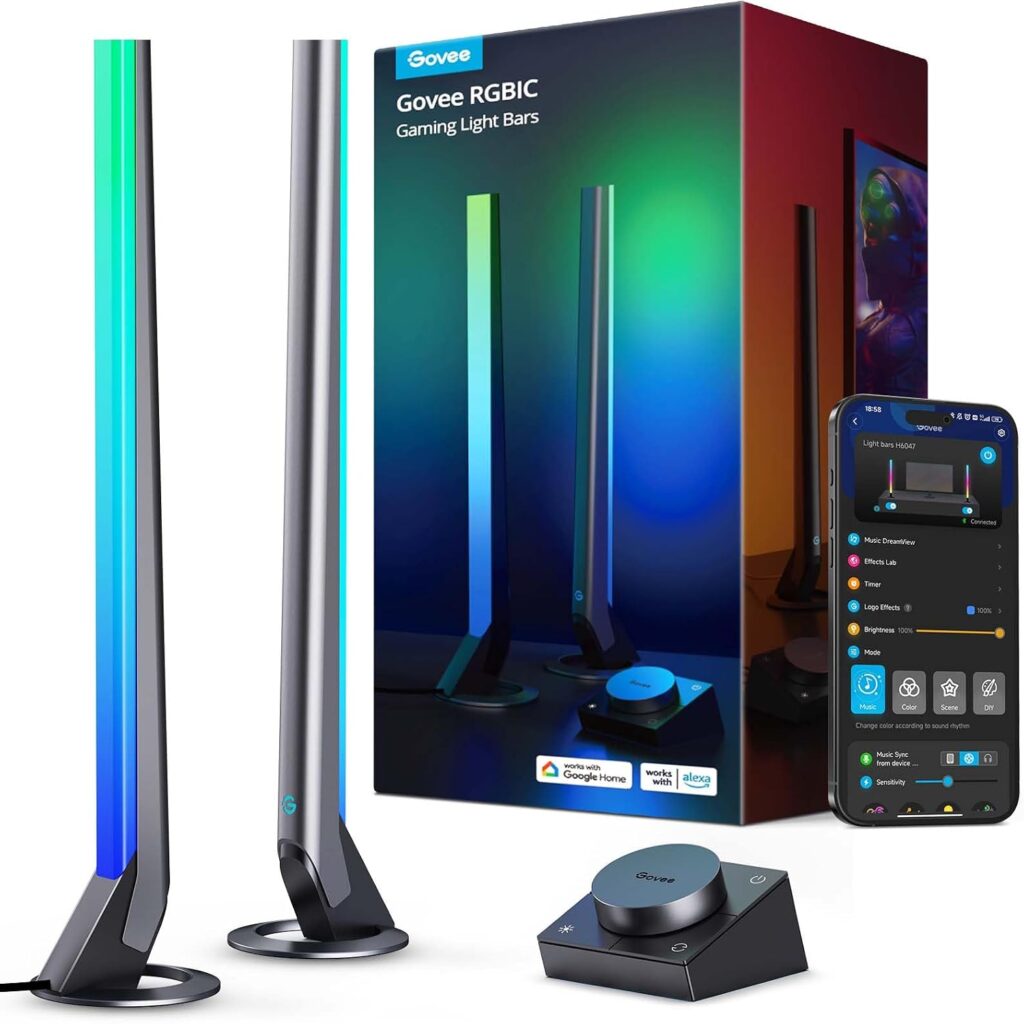
Amazon Find: RGB Gaming Desk Light
Adjustable RGB lighting can add a customizable accent behind a monitor or along a desk without taking up working space.
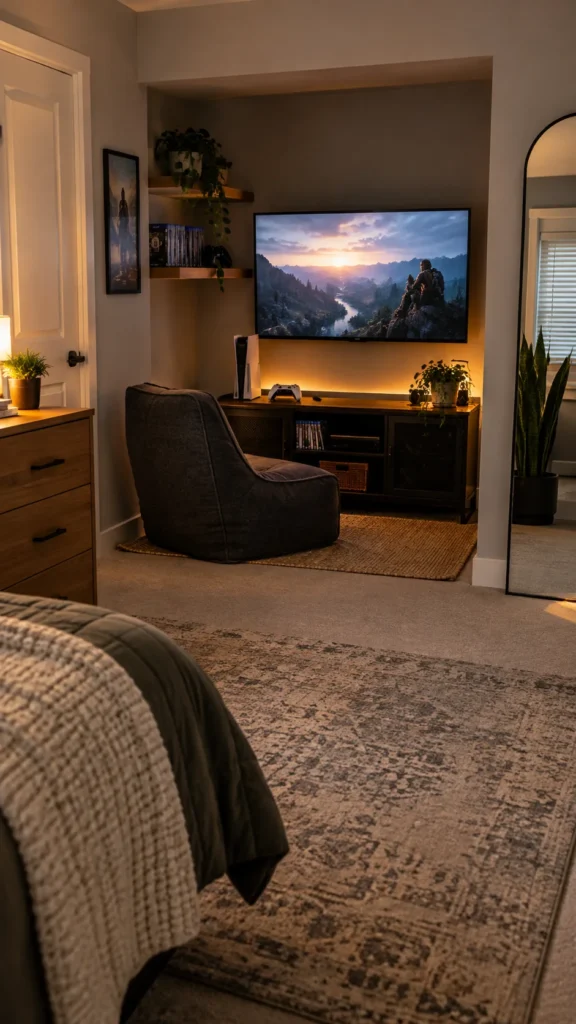
14. Create a Gaming Nook with a TV
Not every gaming space needs a large PC setup. A small nook with a TV, console, and comfortable chair can be enough. Use a narrow console underneath the TV to store controllers and games.
If the room has an unused alcove, this can become a natural gaming zone while leaving the center of the bedroom open for the bed, study area, or other furniture.
15. Design a Gaming and Hangout Zone
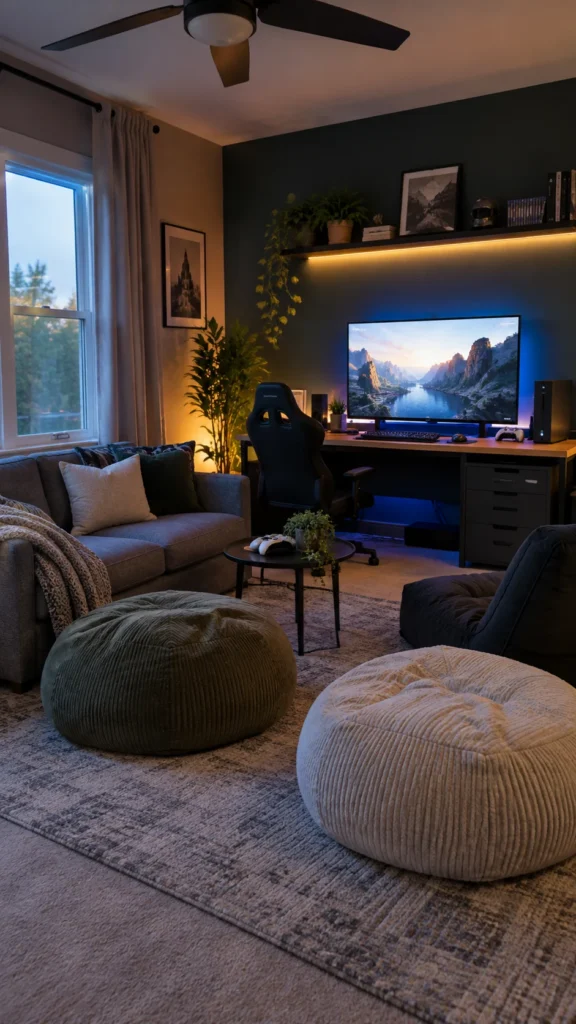
For teenagers who like having friends over, include seating beyond the main gaming chair.
A small loveseat, floor cushions, poufs, or compact lounge chairs can create a social area around the gaming setup. Position the seating so friends can watch the screen without crowding the person at the desk. A small side table can hold drinks and controllers while keeping the main workstation clear.
16. Create a Gaming Space That Grows with the Teen
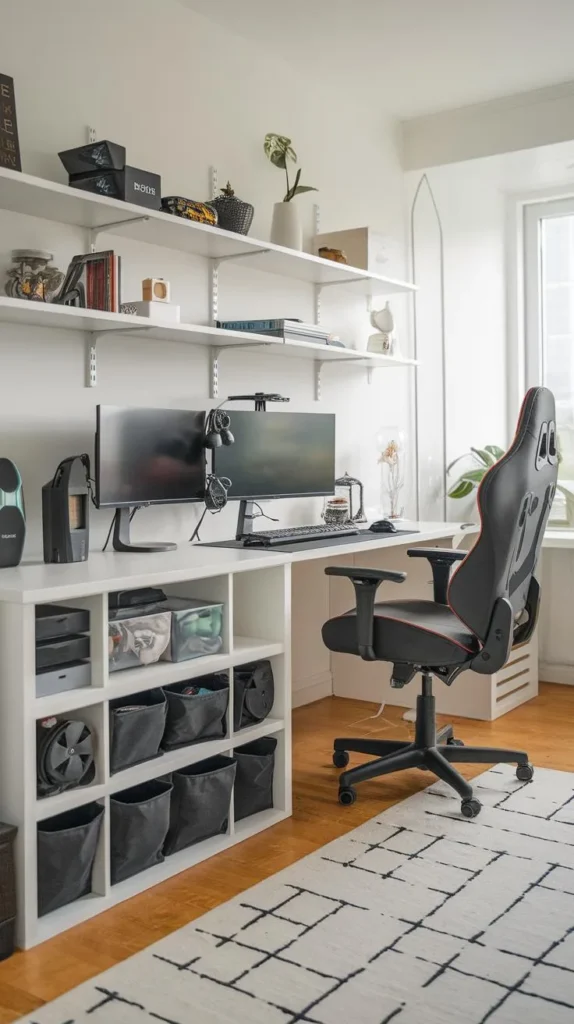
Teenagers’ interests can change quickly, so avoid making every element permanent. Use a neutral desk, versatile storage, removable wall decor, and furniture that can work for school or hobbies as well as gaming.
Let the personality come from accessories that are easy to replace. A setup that starts with gaming collectibles can later become a music, art, streaming, study, or creative workspace without requiring a complete redesign.
How to Make a Teen Gaming Space Feel Personal
The best gaming spaces reflect the person using them. Start by asking what the teenager actually enjoys rather than choosing a theme based solely on what looks good in a photograph.
- Choose a base palette: Neutral walls make it easier to change colorful accessories later.
- Display favorite items: Use shelves for collectibles, figures, books, or game cases.
- Mix hobbies: Gaming can share space with music, sports, art, photography, or other interests.
- Use removable decor: Posters, tapestries, and temporary wall accents are easier to update.
- Leave some empty space: A room does not need every wall covered to feel finished.
Teen Gaming Space Shopping Checklist
Essentials:
- Gaming desk or compact workstation
- Comfortable desk chair
- Monitor or TV
- Keyboard and mouse or gaming controller
- Power strip and cable management supplies
- Basic task lighting
- Storage for controllers and accessories
Optional extras:
- LED light strips
- Floating shelves
- Headset holder
- Bean bag or lounge chair
- Gaming wall art
- Display stands for collectibles
- Storage bins
- Small side table
Reuse suitable furniture whenever possible. An existing desk, bookshelf, nightstand, or storage cube can often become part of a gaming setup with better organization and a few inexpensive accessories.
Common Mistakes to Avoid
- Buying the biggest gaming desk: Measure the room first and leave enough clearance for the chair and walking paths.
- Using too many lights: A few strategically placed lights can create atmosphere without making the room visually chaotic.
- Ignoring cable management: Route cables along the desk or wall instead of letting them hang into walkways.
- Blocking windows: Keep natural light available and position screens to reduce distracting glare where practical.
- Overloading shelves: Check the shelf’s mounting hardware and weight capacity before displaying equipment or collectibles.
- Skipping ventilation: Do not place heat-producing electronics in cramped, poorly ventilated cabinets.
- Making everything permanent: Keep some decorative elements easy to change as the teenager’s interests develop.
Frequently Asked Questions
How do I create a gaming space in a small teenage bedroom?
Use a compact desk against a wall or in a corner, then take advantage of vertical storage. Floating shelves, under-bed containers, and wall-mounted organizers can keep gaming equipment off the floor. A TV gaming nook can also work when there is not enough room for a full PC setup.
What colors work well for a teenage gaming room?
There is no single correct palette. Dark navy, charcoal, black, gray, white, and natural wood can provide a versatile foundation, while brighter blue, green, purple, red, or orange accents can add personality. Let the teenager choose colors that fit their interests.
How can I hide gaming cables?
Use cable clips, sleeves, under-desk trays, and cable boxes to group cords together. Route them along the rear edge of the desk or wall where possible. Labeling cables can also make future equipment changes easier and prevent unnecessary unplugging.
Should a teen gaming room also have a study area?
If the room is also used for homework, combining the two functions can save space. Choose a desk with enough surface area for schoolwork and gaming, and keep study supplies organized separately from gaming accessories. A dedicated task light can make the workstation more versatile.
How can I make a gaming room easy to update?
Keep major furniture and wall colors relatively versatile, then use artwork, posters, lighting, bedding, collectibles, and small accessories to express current interests. These smaller pieces can be replaced without changing the entire room when tastes evolve.
Final Thoughts
A great teen gaming space does not have to be huge or filled with expensive equipment. A well-planned desk, comfortable seating, organized storage, good lighting, and a few personal details can create a space that feels genuinely connected to the teenager using it.
Start with the layout and the activities that matter most, then add decor gradually. The best game space ideas for teenagers leave room for personality and change, so the setup can continue working as gaming interests, hobbies, school needs, and personal style develop.
