
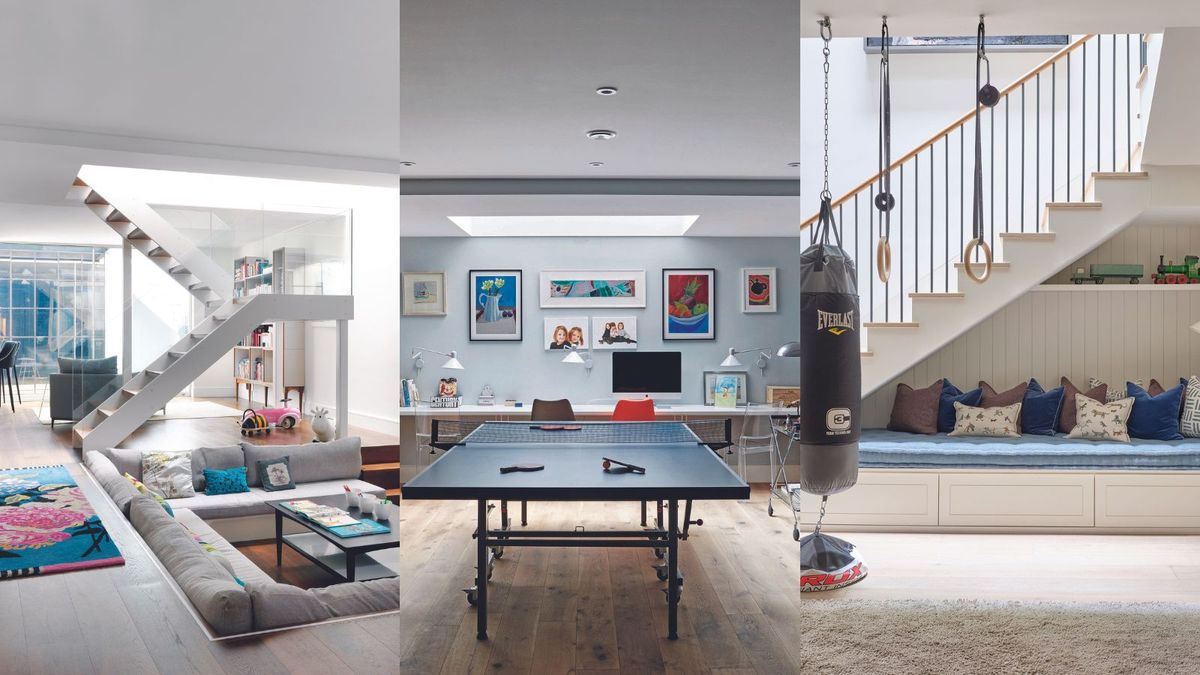

A basement can be the perfect place to create a game room that feels completely different from the rest of the house. With fewer everyday living requirements, you can experiment with bold colors, arcade-inspired decor, immersive lighting, oversized seating, and multiple types of games.
These basement game room ideas range from retro arcades and VR zones to home theaters, sports simulators, tabletop gaming areas, and flexible entertainment spaces. You can build one dramatic feature or combine several ideas into a basement that becomes the favorite hangout in the house.
16 Basement Game Room Ideas at a Glance
- Retro Arcade Basement
- Immersive VR Gaming Zone
- Ultimate Board Game Nook
- Home Theater Gaming Lounge
- Basement Bar and Billiards Zone
- DIY Escape Room Challenge
- Mini Bowling Lane
- Sports Simulator Room
- Fantasy-Themed Gaming Basement
- Interactive Game Wall
- Tabletop RPG Command Center
- Multi-Screen Gaming Lounge
- Neon Cyberpunk Gaming Room
- Classic Pool Hall Setup
- Gaming Snack Bar
- Multi-Purpose Game Night Basement
Plan Your Basement Game Room Before Decorating
| Game Room Zone | Best Feature | Planning Tip |
|---|---|---|
| Video gaming | TV, console, or PC station | Plan seating and cable routes first |
| Arcade | Arcade cabinet and neon accents | Leave comfortable clearance around machines |
| Tabletop games | Large table and dedicated storage | Use adjustable lighting over the table |
| Active games | VR, bowling, or sports simulator | Measure the full operating area, not just the equipment |
| Social area | Sofa, bar, or snack station | Keep seating away from active play zones |
16 Crazy Basement Game Room Ideas
1. Build a Retro Arcade Basement
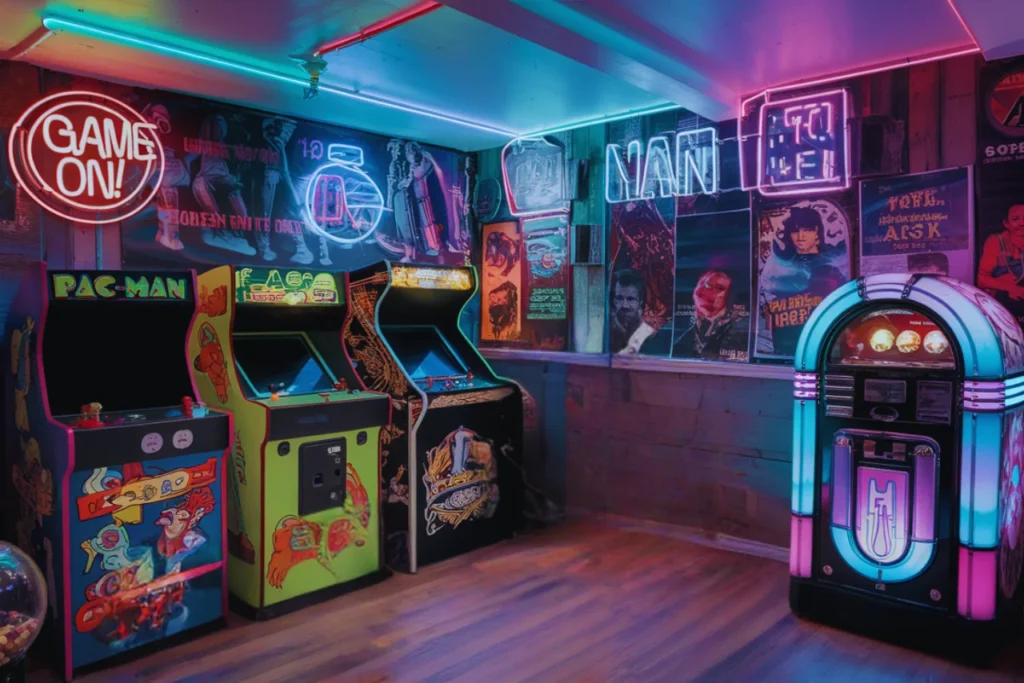
Turn the basement into a throwback arcade with colorful machines, vintage-inspired artwork, glowing signs, and a dedicated high-score wall.
You do not need a room full of full-size cabinets to get the look. Start with one or two arcade machines and build the atmosphere around them using checkerboard flooring, bold wall graphics, or framed retro game artwork.
Add a small bench or stools nearby so people can watch while someone plays. Keep the walkways clear around each machine, especially if several people will be using the room at once.
Amazon Find: Retro Arcade Decor
Retro-inspired wall signs and arcade decor can establish the nostalgic theme without requiring a large collection of arcade machines.

2. Create an Immersive VR Gaming Zone
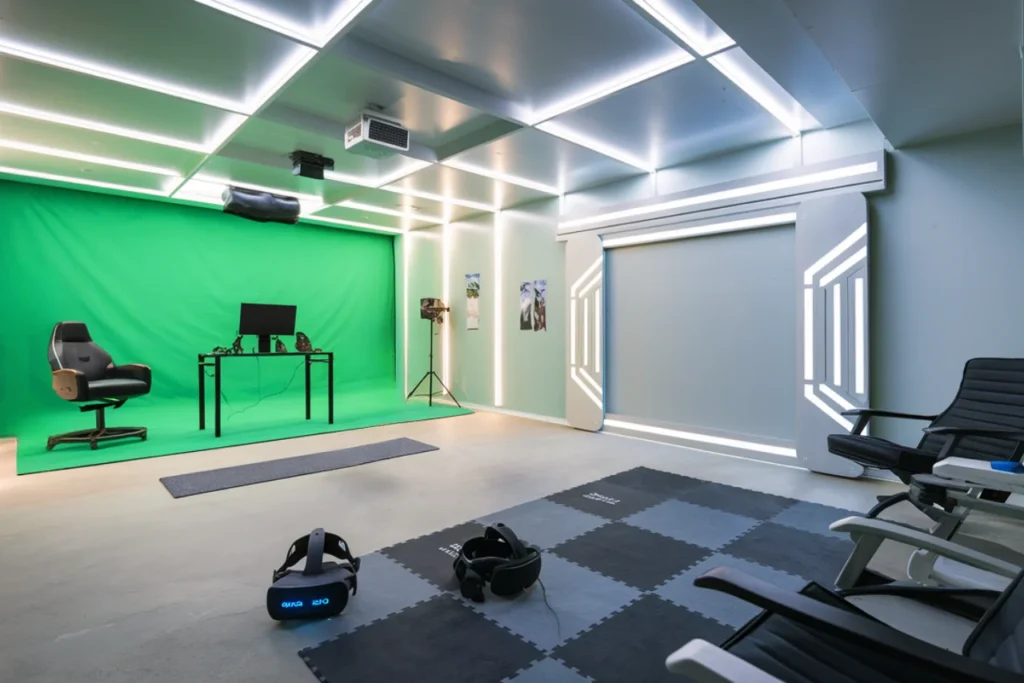
A basement can be an excellent location for a VR area because you can dedicate an open section of floor to movement. Keep furniture, lamps, low shelves, and other obstacles outside the active play area.
Use a simple floor mat to visually define the zone and place the headset and accessories on nearby storage. Soft ambient lighting can add atmosphere without creating obstacles. Before using any VR equipment, follow the play-area and safety instructions provided by the equipment manufacturer.
Amazon Find: VR Gaming Floor Mat
A dedicated floor mat can help visually mark the VR play area and make the space feel like a defined gaming zone.
3. Design an Ultimate Board Game Nook
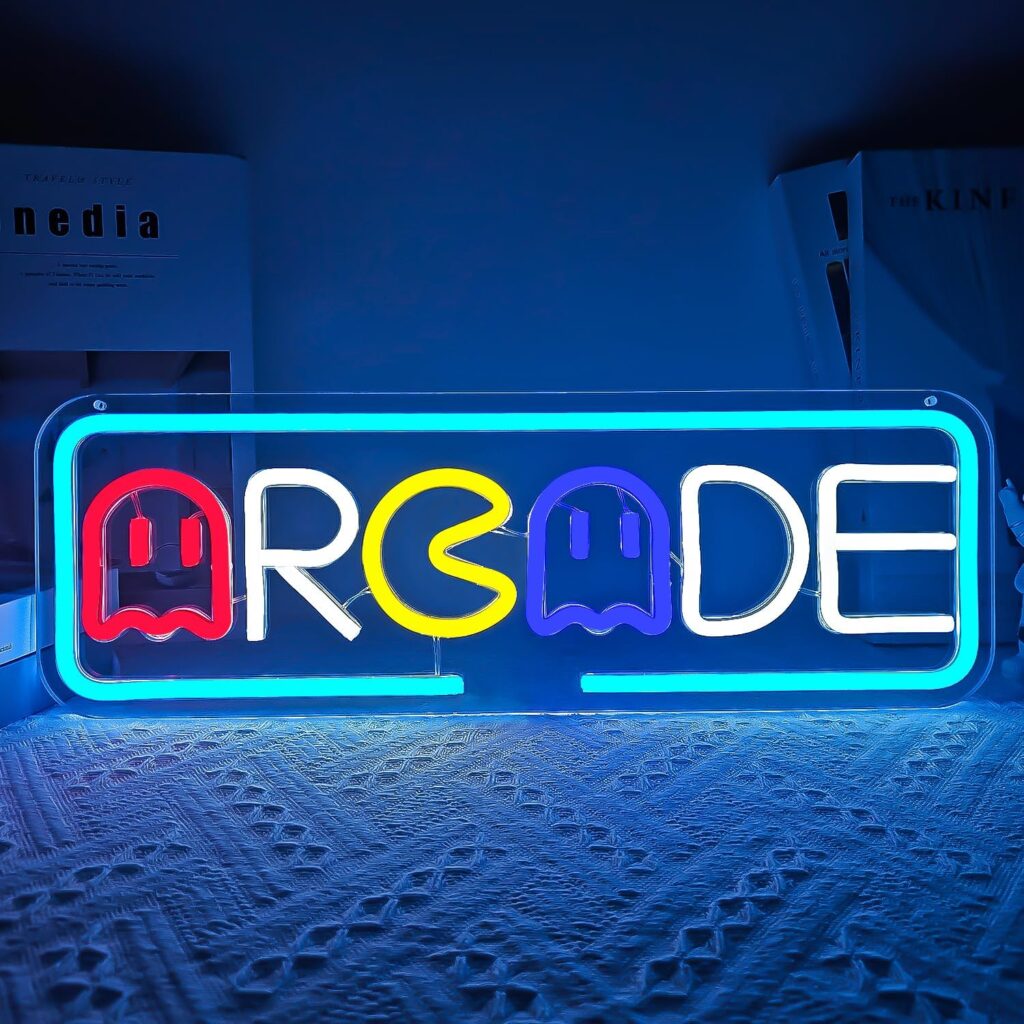
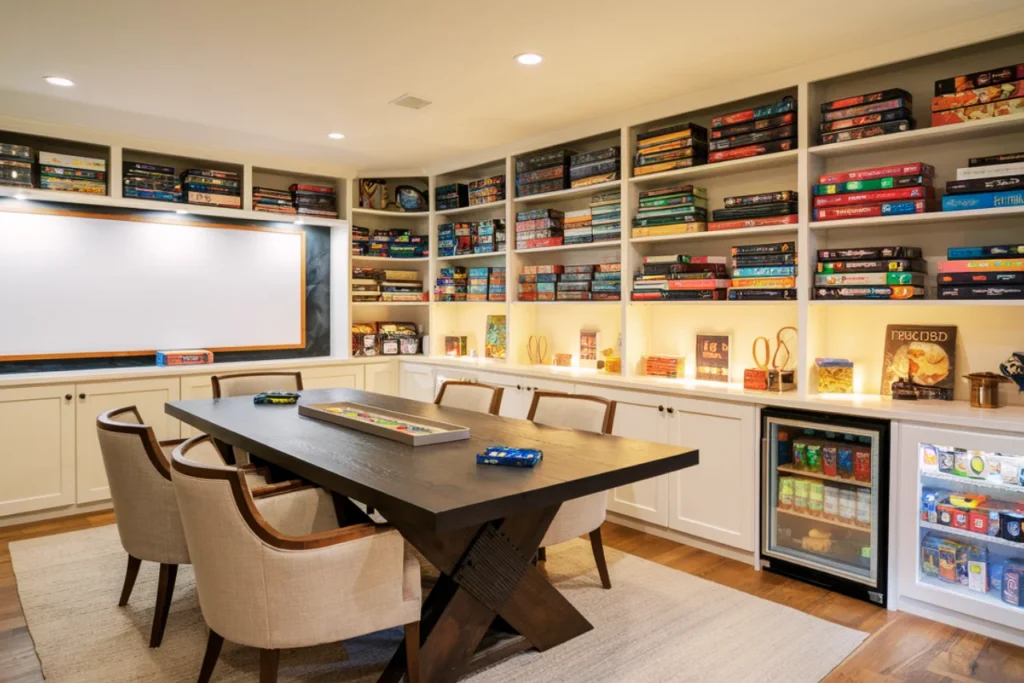
Give tabletop gaming its own destination with a large, sturdy table surrounded by comfortable chairs. Use nearby bookcases or cube storage to organize board games, card games, puzzles, and accessories.
A table with drawers or built-in storage is especially useful because game pieces can stay close to the playing surface. Add an adjustable pendant or ceiling fixture above the table so everyone can clearly see cards, boards, and small pieces.
A wall-mounted whiteboard can provide a convenient place for scores and game-night notes.
4. Combine a Home Theater with Gaming
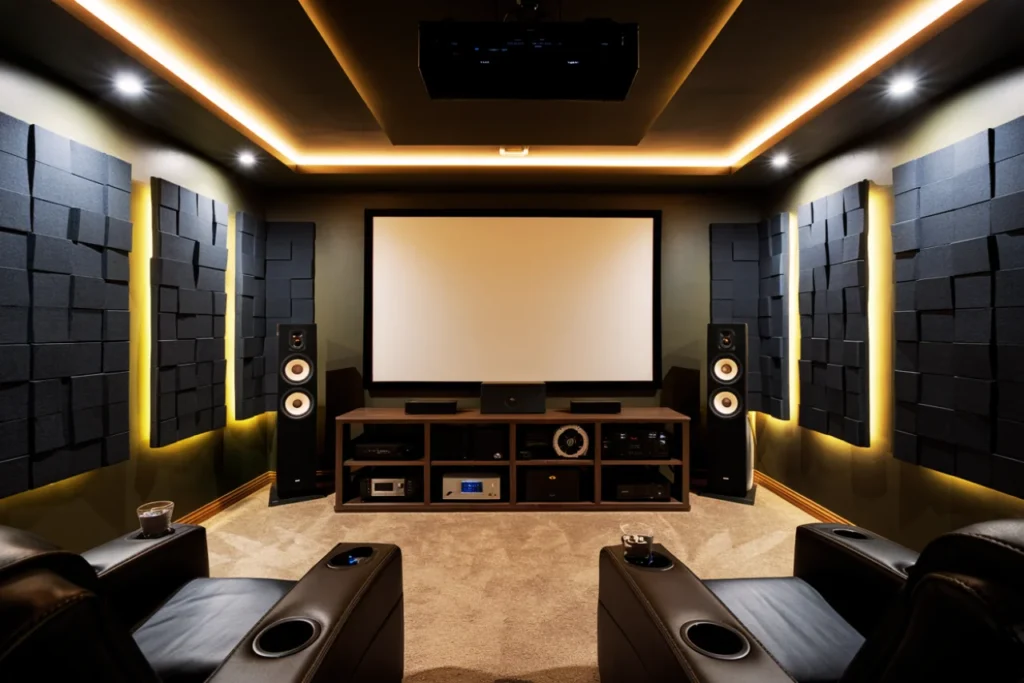
Create one dramatic entertainment wall that works for both movie nights and gaming.
A large TV or projector can become the focal point, while comfortable recliners or a sectional provide flexible seating. Keep consoles and media equipment on a ventilated media console underneath the screen.
Dimmable lighting can change the atmosphere for different activities, while acoustic treatments can help manage sound in the room.
Keep pathways and stairs adequately illuminated so the basement remains easy to navigate when the main lights are dimmed.
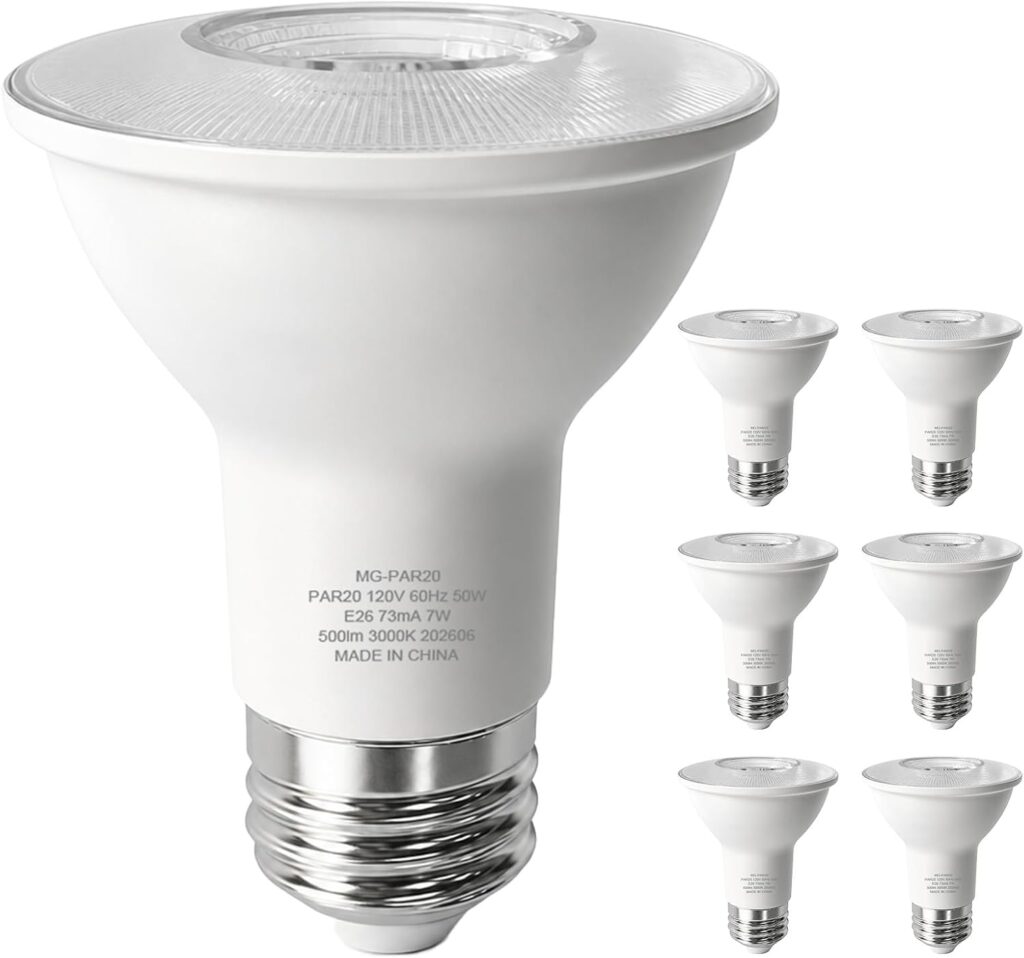
Amazon Find: Home Theater LED Lighting
Dimmable accent lights can add a theater-like atmosphere around a screen, shelving, or seating area.
5. Add a Basement Bar and Billiards Zone
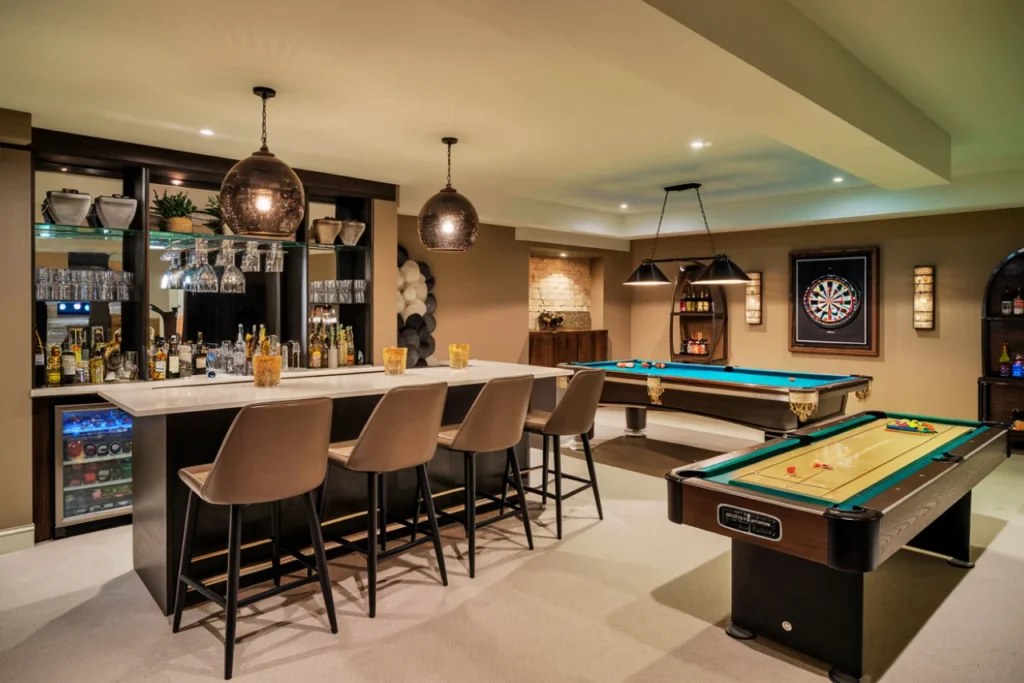
For an adult-oriented entertainment basement, pair a pool table with a compact bar area. Use the bar as a visual anchor and place the pool table where players have enough room to move around it.
Wall-mounted cue storage can save floor space, while a few stools provide casual seating. For a family home, the bar can instead function as a snack and beverage station.
If alcoholic beverages are served, keep the setup separate from children’s play areas and follow applicable safety practices.
6. Turn a Corner into an Escape Room Challenge
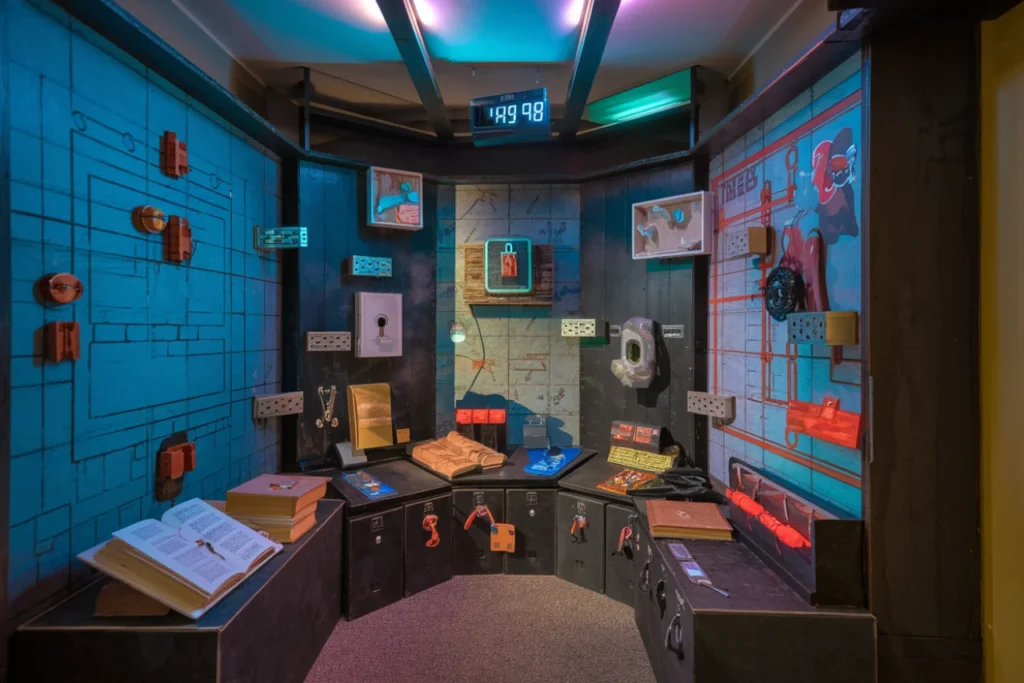
Create a puzzle-filled corner where family and friends have to solve clues, discover hidden objects, and work through a storyline. Use lockable boxes, combination puzzles, clue cards, maps, and decorative props to create the challenge.
A small room or enclosed basement area can work particularly well because the surroundings naturally add atmosphere. Make the puzzles easy to reset so you can change the challenge for future game nights.
Avoid anything involving real hazards or inaccessible emergency exits.
7. Install a Mini Bowling Lane
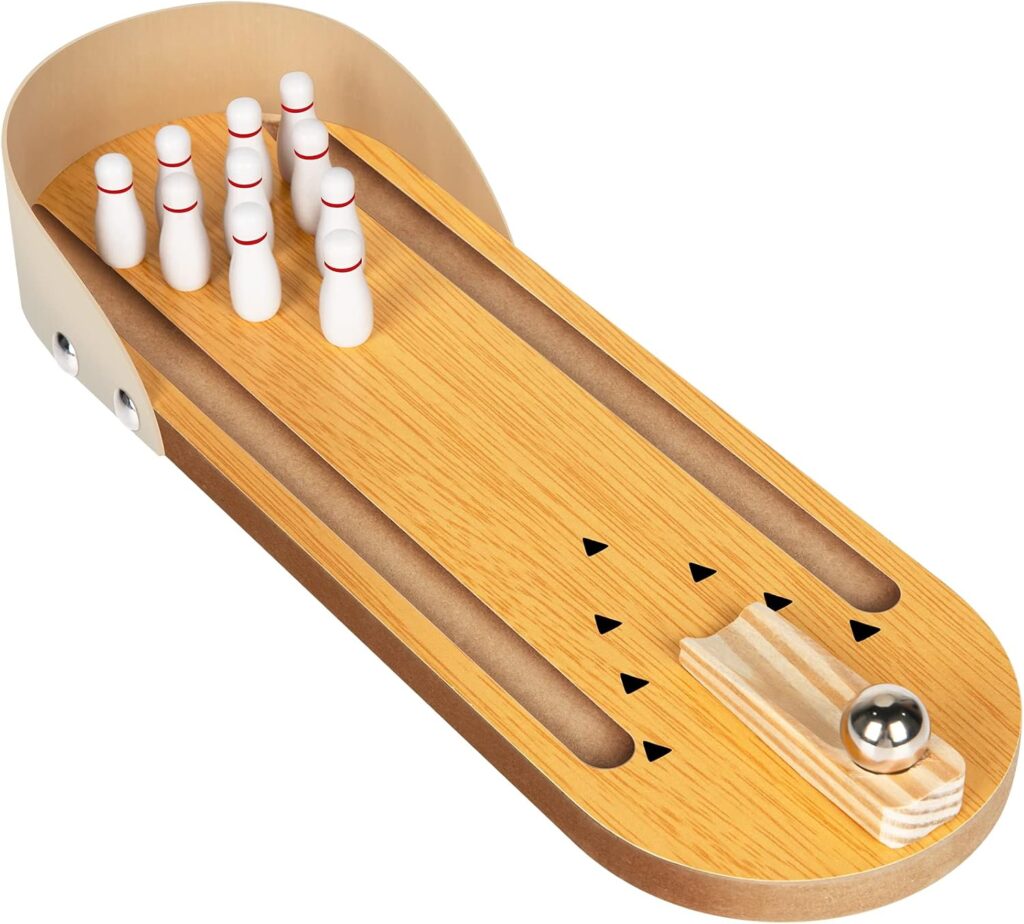
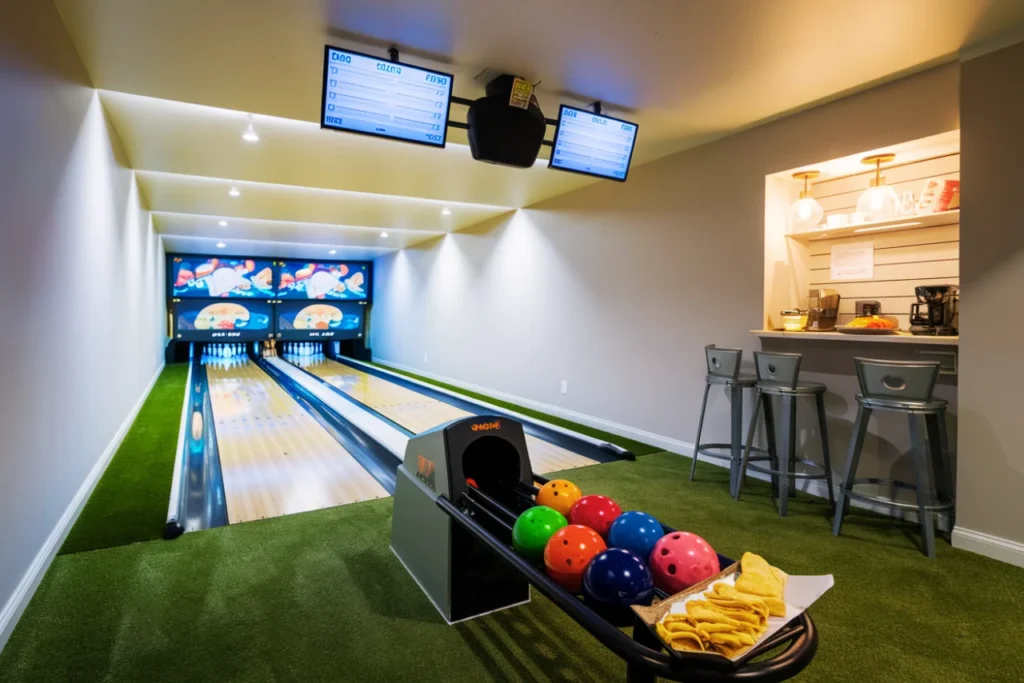
If the basement has a long, relatively narrow section, use it for a compact bowling-inspired game. A mini bowling set can provide the concept without requiring a commercial-size installation.
Mark a clear starting line and create a simple scoring board on the wall.
Add bowling-themed lighting or framed signs to reinforce the look. Measure the entire lane, player position, and surrounding clearance before buying equipment so the setup does not interfere with other basement activities.
Amazon Find: Mini Bowling Game
A compact bowling game can bring the idea of a bowling alley into a basement without requiring a full-size installation.
8. Create a Sports Simulator Room
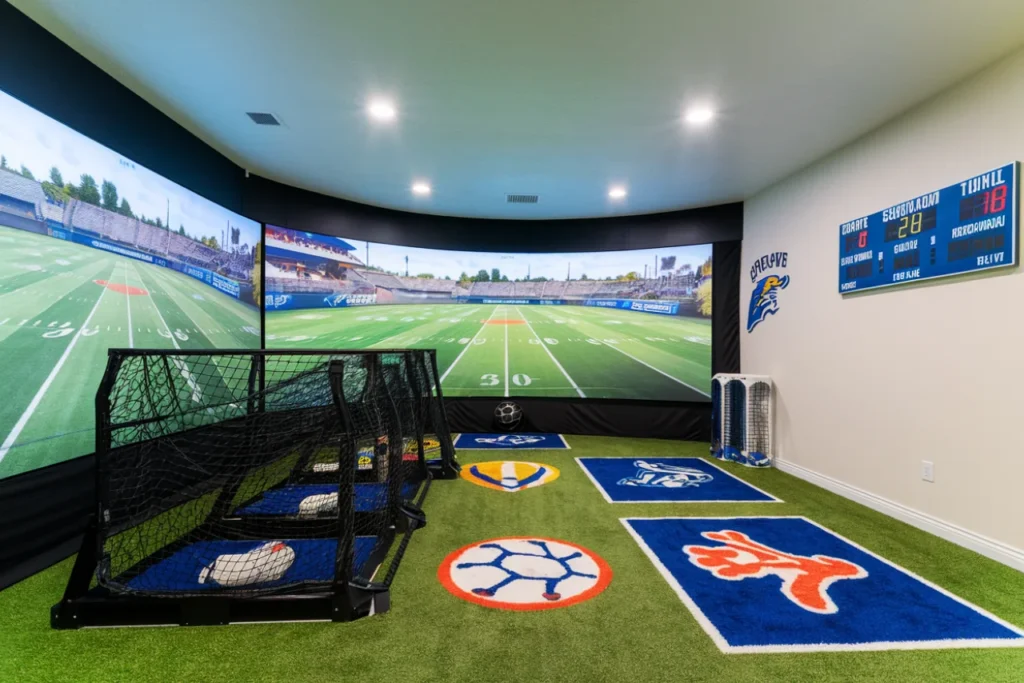
A sports simulator can make a basement feel like an indoor recreation center. Golf is one possibility, but the same general concept can work for other interactive sports experiences.
The important part is creating enough clearance for the equipment and the player’s movement. Use a large screen as the visual focus and add sports memorabilia to make the room feel intentional.
Before installing a simulator, carefully check the manufacturer’s space requirements, ceiling height, and equipment recommendations.
9. Go All-In on a Fantasy-Themed Gaming Basement
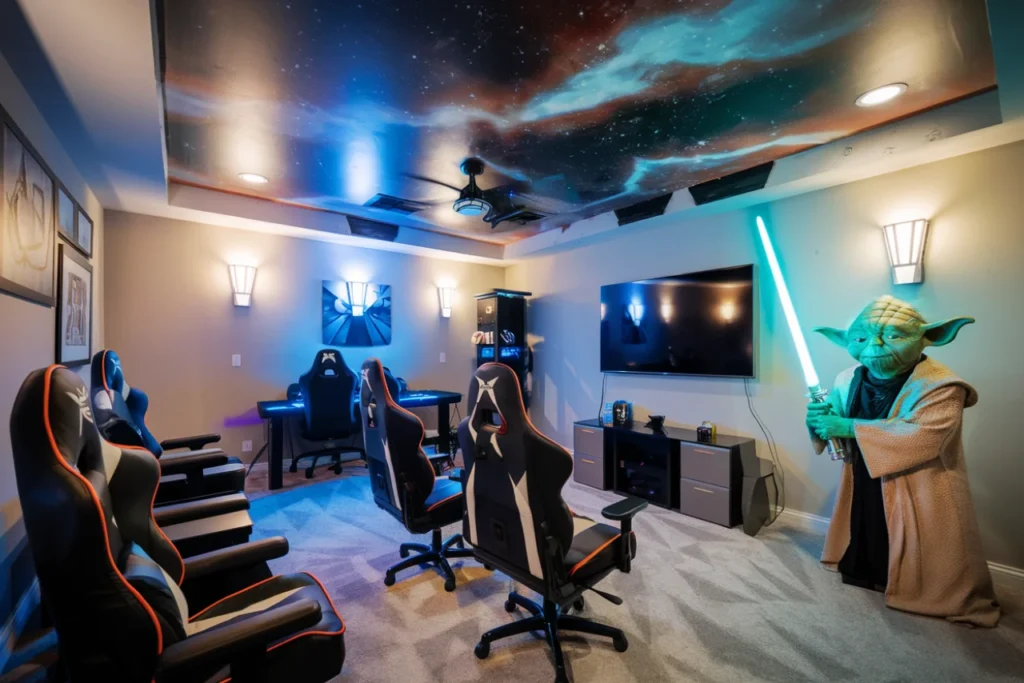
For a truly dramatic game room, choose a theme and carry it through the walls, lighting, furniture, and accessories. A fantasy room might use deep green, charcoal, warm wood, faux stone textures, maps, lantern-style lighting, and display shelves for collectibles.
Other themes could include space exploration, medieval fantasy, pixel art, racing, or a favorite game universe. Keep the permanent finishes relatively versatile and use removable decor for details that may eventually need updating.
10. Turn the Walls into Interactive Games
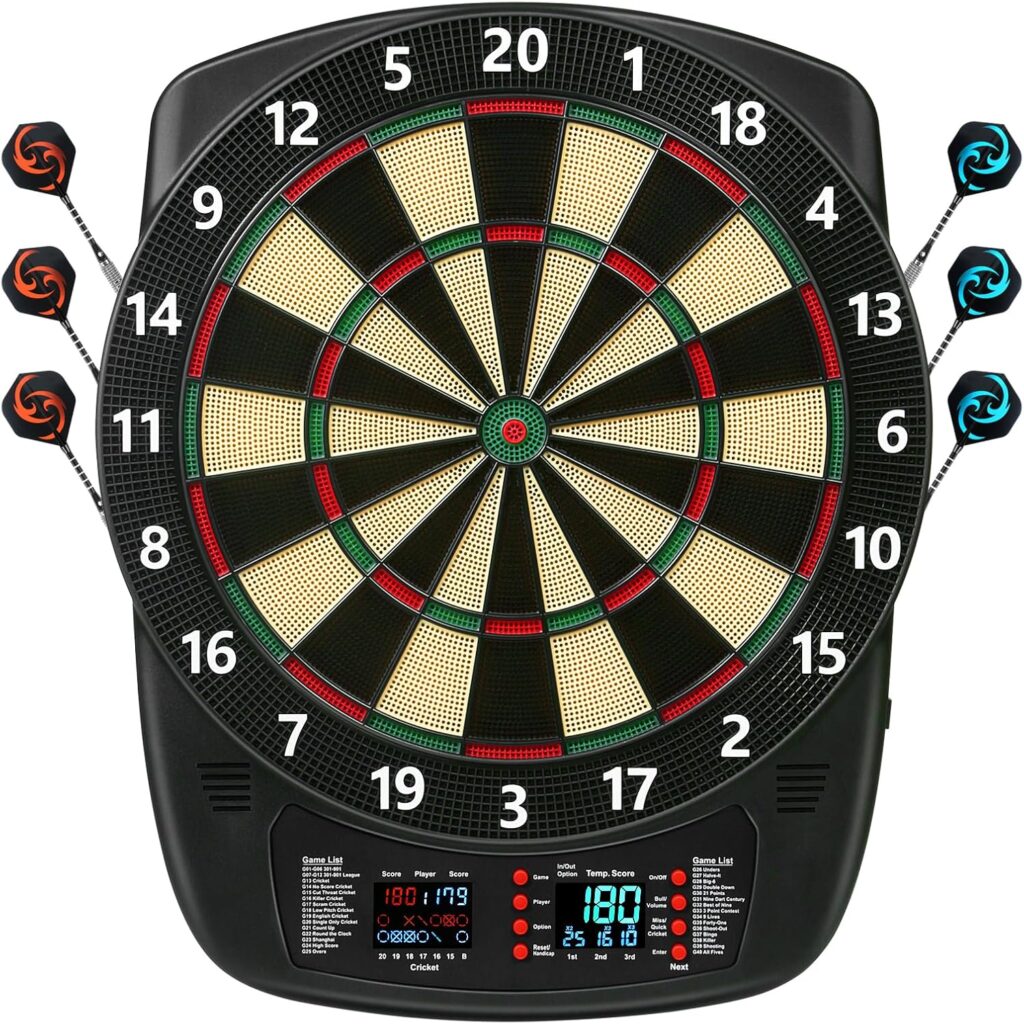
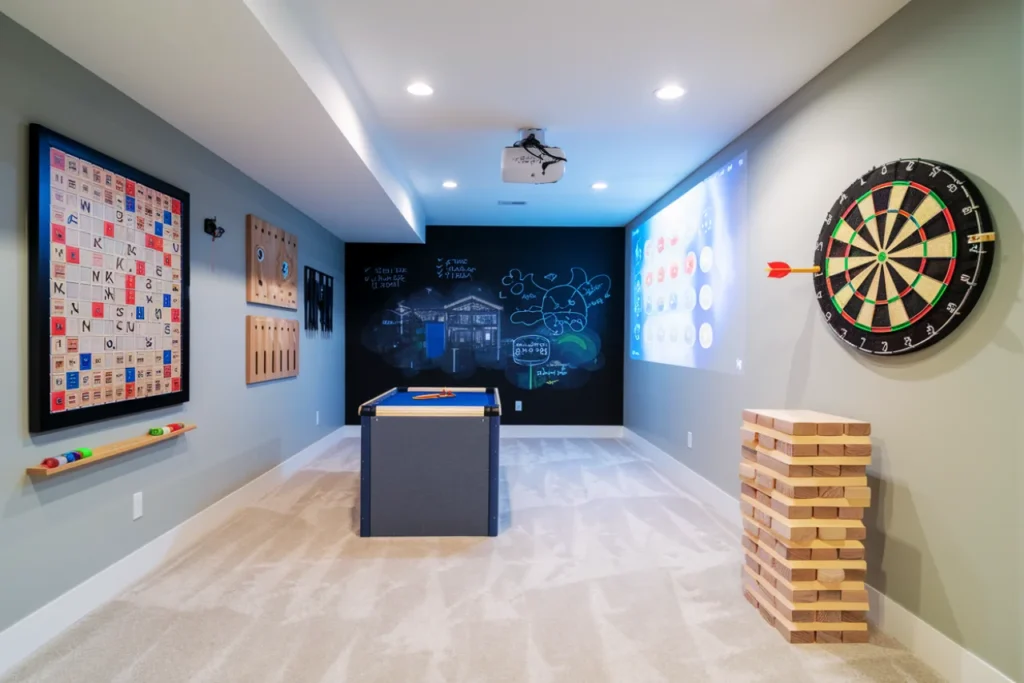
A game room does not have to keep every activity on a table or screen. Use one wall for interactive entertainment. A chalkboard section can host drawing competitions, a magnetic surface can become a giant word game, and a soft-tip dartboard can create another activity when properly positioned. Wall-mounted games are especially helpful in a basement where floor space is already occupied by larger equipment. Make sure interactive games are installed securely and positioned away from fragile objects or high-traffic paths.
Amazon Find: Soft-Tip Dartboard
A soft-tip dartboard can add an interactive wall game while being suited to a more casual indoor game-room setup.
11. Build a Tabletop RPG Command Center
Make tabletop role-playing games the star of the basement with a dedicated campaign table. Add shelves for rulebooks, miniatures, dice, maps, and terrain pieces. A large table gives players room to spread out while adjustable lighting helps illuminate detailed game pieces. Create a special wall for campaign maps, character art, or a rotating adventure board. Storage drawers near the table can keep miniatures and accessories organized between sessions.
12. Create a Multi-Screen Gaming Lounge
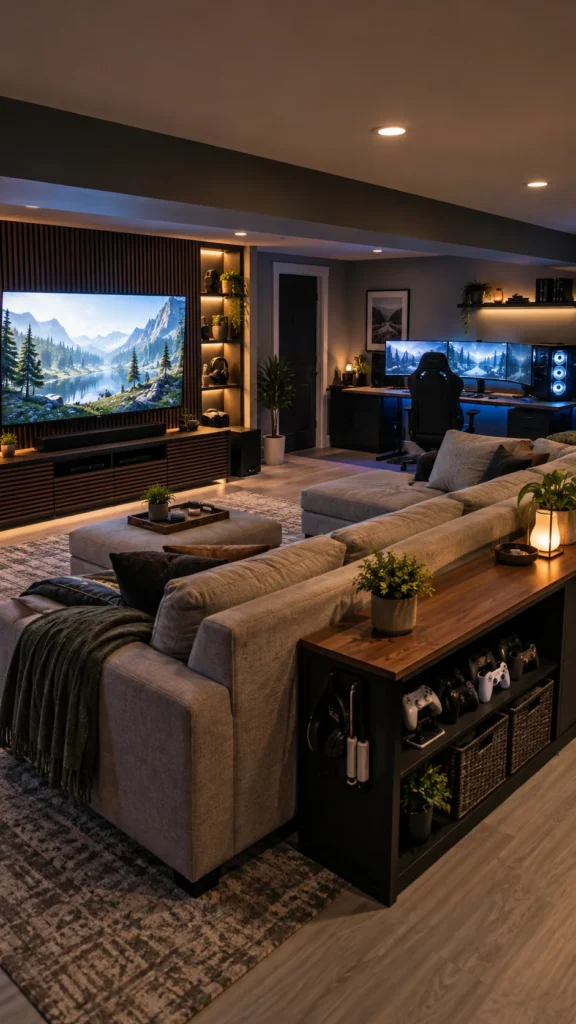
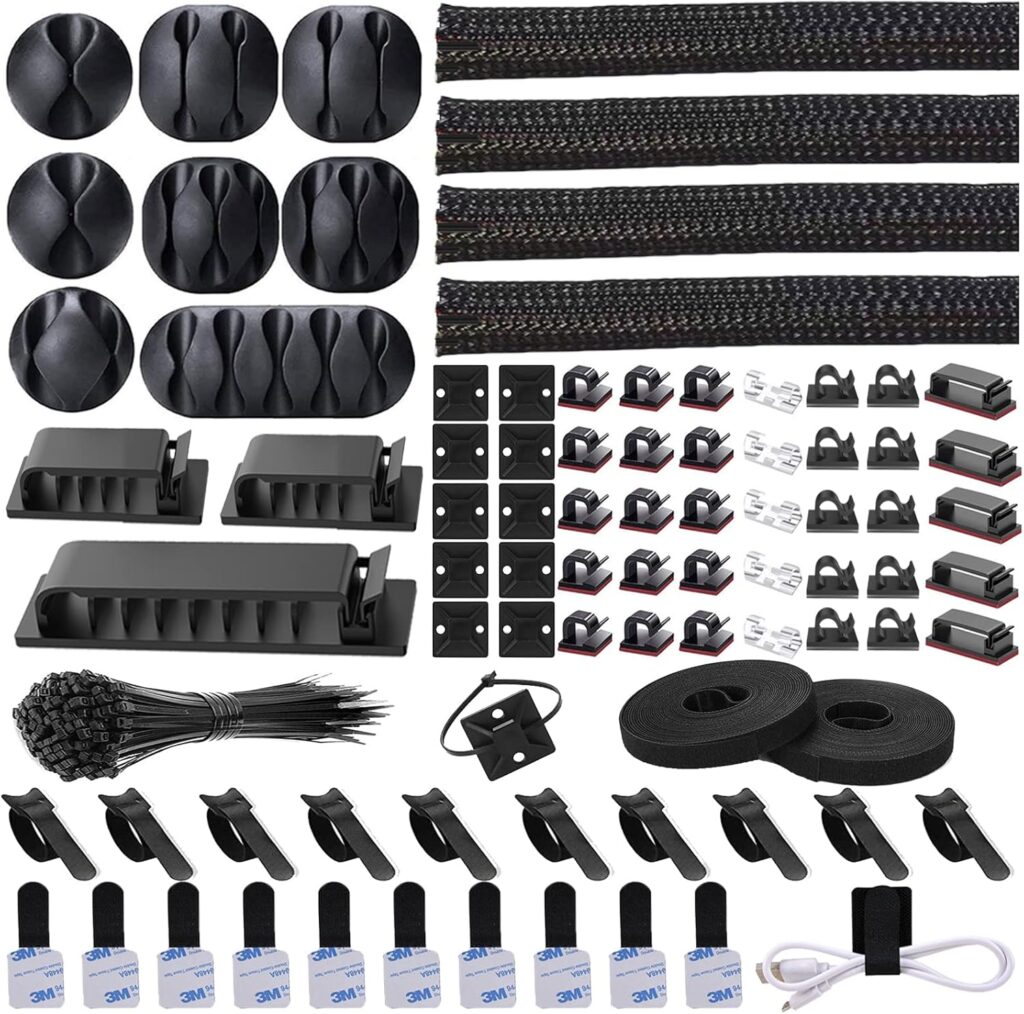
If the basement is designed for multiplayer gaming, consider several gaming stations arranged around one shared lounge. One large screen can handle console games while a separate desk area supports PC gaming. Add a comfortable sectional or modular seating in the center so players can take breaks and spectators have somewhere to sit. Keep charging stations and controllers organized in one location. Cable management becomes especially important when several systems share the same room.
Amazon Find: Gaming Cable Management Kit
Cable sleeves, clips, and organizers help keep multiple gaming stations from turning the basement floor into a tangle of wires.
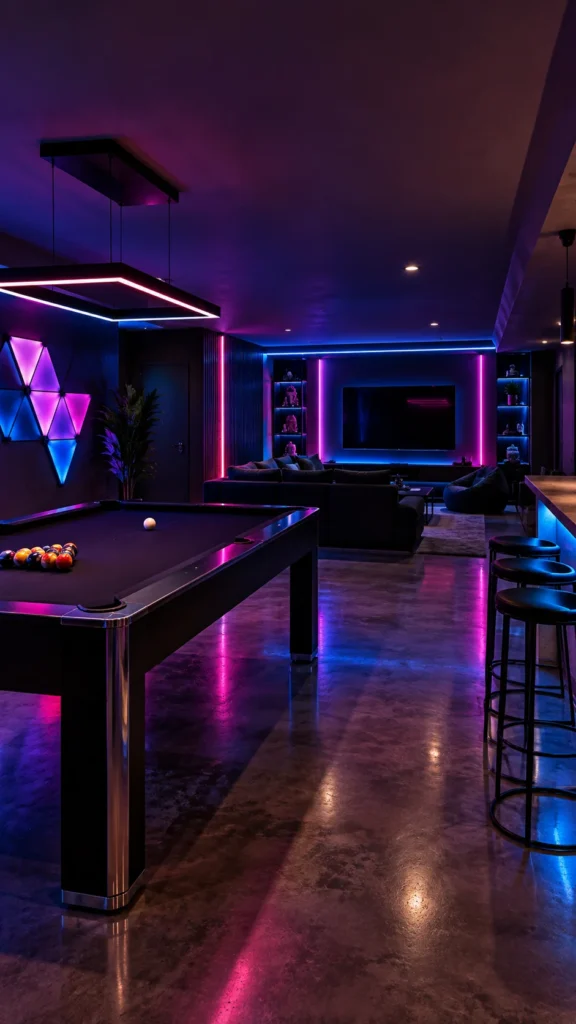
13. Go Full Cyberpunk with Neon Lighting
For a bold gaming basement, use dark walls as a backdrop for neon-inspired lighting. Combine LED strips with illuminated signs, geometric wall panels, and metallic or black furniture.
Keep the furniture shapes simple so the lighting becomes the main visual feature.
You can also use a few reflective surfaces to bounce the glow around the room. Rather than installing permanent colored fixtures everywhere, use adjustable lighting so the atmosphere can change for different activities.
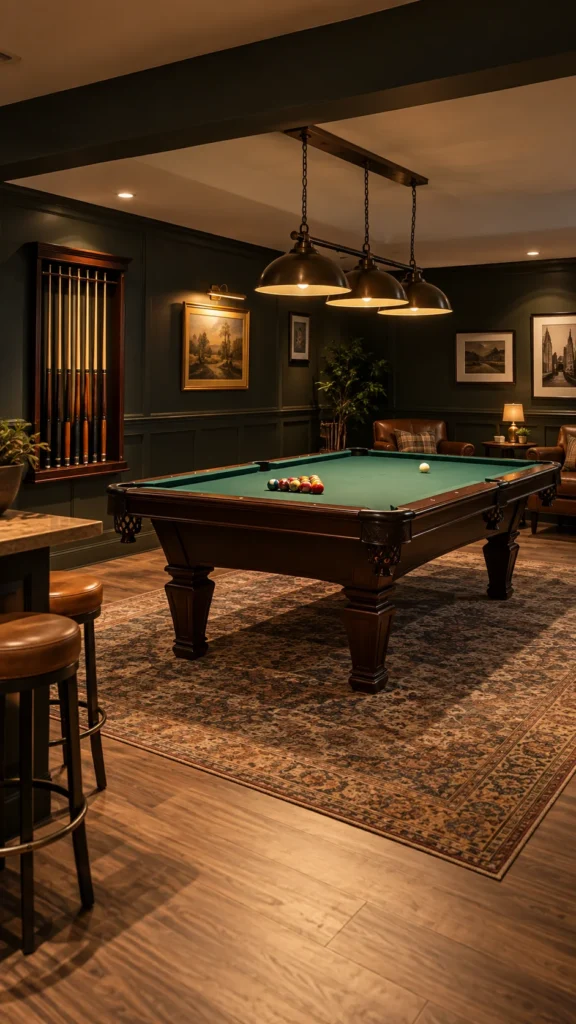
14. Recreate a Classic Pool Hall
A pool table can turn the basement into a classic social game room. Give it plenty of open space on all sides so players can use their cues comfortably.
Add a wall-mounted cue rack, simple framed artwork, a scoreboard, and a few stools or lounge chairs.
A darker wall color can reinforce the pool-hall atmosphere, while warm lighting over the table keeps the playing surface visually distinct from the rest of the room.
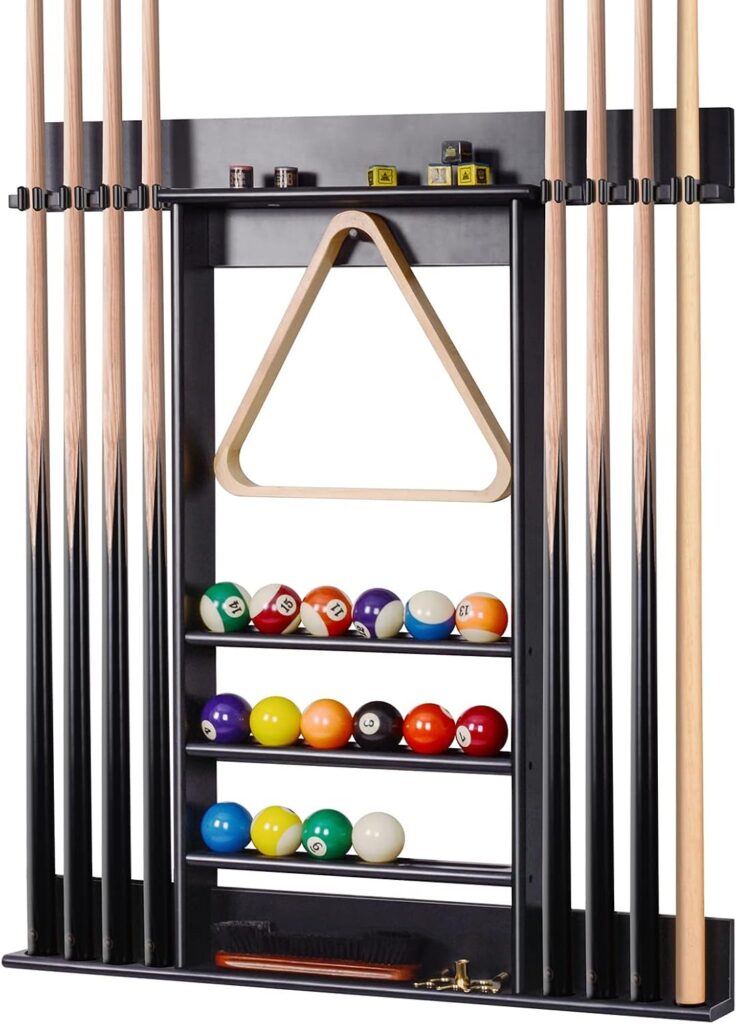
Amazon Find: Pool Table Accessories
A wall-mounted cue rack and organized accessory storage can keep a pool area tidy while adding to the classic game-room look.
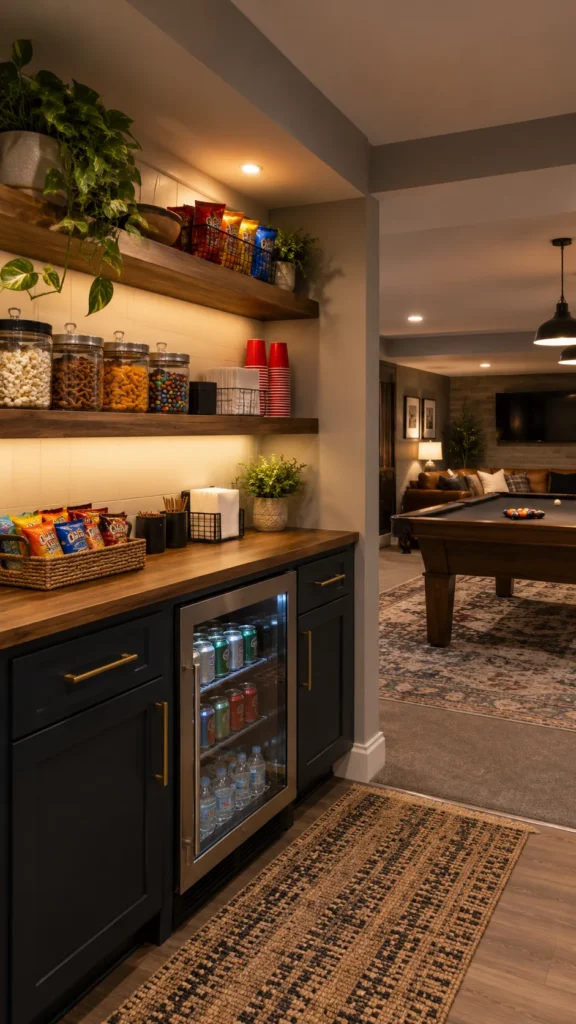
15. Add a Dedicated Gaming Snack Bar
Give the basement a concession-stand feel with a compact snack station. A narrow counter, rolling cart, shelves, or cabinet can hold packaged snacks, cups, napkins, and other game-night supplies.
Add a small beverage refrigerator if the room and electrical setup are appropriate. Keep food and drinks away from electronics, power strips, and controllers.
A simple menu board or illuminated sign can make the station feel like part of the game-room design rather than an ordinary storage area.
16. Create a Multi-Purpose Game Night Basement
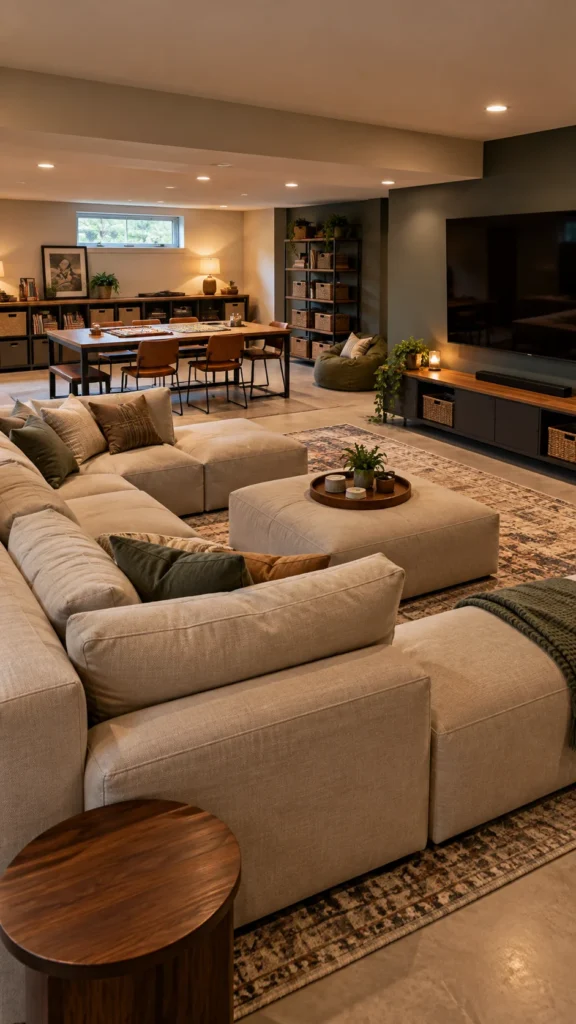
If you want maximum flexibility, create a basement that can switch between several activities. Use modular seating, a folding game table, movable storage, and a large TV as the core pieces.
One weekend the room can host a movie night, the next it can become a board game area, and another evening it can accommodate console gaming or a tournament. Keep storage against the perimeter so the center can be rearranged quickly.
This approach also makes the room easier to adapt as your family’s interests change.
Basement Game Room Shopping Checklist
Start with the essentials:
- Comfortable seating
- Gaming TV or monitor
- Gaming console or PC setup
- Appropriate power strips and cable management
- Game storage
- Adjustable room lighting
- Tables suited to your chosen games
- Storage for controllers and accessories
Optional statement pieces:
- Arcade cabinet
- Pool table
- Mini bowling game
- VR equipment
- Sports simulator
- Neon gaming signs
- Snack cart or beverage station
- Themed wall artwork
Before buying large equipment, measure the basement carefully. Include stair access, doors, support columns, low ceilings, walking paths, and the operating space required for the game itself. Reusing existing shelving or furniture can also reduce the amount of new equipment needed.
Basement Game Room Mistakes to Avoid
- Skipping moisture planning: Make sure the basement is appropriately dry and address moisture problems before installing expensive furniture or electronics.
- Choosing equipment before measuring: Large game equipment can be difficult to move through basement doors and stairways, so measure access points before purchasing.
- Ignoring ceiling height: Check overhead clearance before planning sports simulators, VR play, or other activities that involve raised equipment or movement.
- Overcrowding the room: Leave sufficient space around pool tables, arcade machines, seating, and active gaming zones.
- Hiding electronics without ventilation: Consoles, PCs, receivers, and other heat-producing devices need appropriate airflow.
- Leaving cords across walkways: Route cables along walls, behind furniture, or through suitable cable-management systems.
- Using only decorative lighting: Include practical illumination for stairs, game tables, storage, and walkways.
- Making the theme too permanent: Use easily replaceable artwork and accessories so the room can evolve without another major renovation.
Frequently Asked Questions
How do I turn my basement into a game room?
Start by deciding which games and activities matter most, then divide the basement into zones. Plan seating, entertainment equipment, storage, lighting, and open floor areas before adding decorative details. If the basement has moisture or electrical concerns, address those before installing furniture and electronics.
What should every basement game room have?
The essentials depend on the type of game room, but comfortable seating, suitable lighting, organized storage, reliable power, and enough open space are useful foundations. From there, add the equipment that matches how you actually plan to use the basement.
How can I make a basement game room feel more exciting?
Use one strong visual theme rather than adding random decorations everywhere. Neon lighting, arcade artwork, a dramatic entertainment wall, a themed ceiling, or a dedicated game zone can create a strong focal point. Keep the rest of the room relatively simple so the main feature stands out.
How much space is needed for a basement pool table?
The required room size depends on the table and cue length, so measure the specific equipment before planning the layout. You need enough clearance around the table for players to take shots comfortably. Columns, walls, furniture, and other obstacles should be considered as part of the usable space.
Can a basement game room also be used as a family room?
Absolutely. A large TV, sectional sofa, movable chairs, storage cabinets, and a flexible game table can create a room that works for movies, gaming, board games, and everyday relaxation. Modular furniture makes it easier to change the layout when different activities require more floor space.
Final Thoughts
A basement gives you room to think beyond the standard gaming desk. You can create an arcade, home theater, pool hall, VR zone, tabletop headquarters, sports simulator, or a combination of several activities.
Start with the activities you want the basement to support, measure the available space, and build the layout around those priorities. Then bring in the dramatic details—lighting, artwork, colors, signs, and themed accessories—that make the game room feel uniquely yours. The best basement game room is not necessarily the one with the most equipment; it is the one that makes people want to stay and play.
